Overview
If you are visiting Hakodate for the first time, I would give yourself two nights and three full days.
You can certainly see Hakodate in one night. You can even rush through the highlights in a day. But that is not how I like to travel here.
Hakodate rewards you when you slow down.
With three days, you have enough time for the seafood and noise of Hakodate Morning Market, the old warehouses and harbor, the famous night view from Mount Hakodate, the star-shaped Goryokaku fortress, and the quiet streets of Motomachi. More importantly, you can finish the second day in Yunokawa Onsen instead of spending the entire trip jumping from one sightseeing spot to another.
That extra night changes the feeling of the trip.
You can eat a proper Japanese dinner, put on a yukata, soak in a hot spring, sleep well, and wake up without immediately thinking about your next train.
This itinerary is designed for first-time visitors who want the famous Hakodate sights but also want to taste the city, hear its trams, smell the sea air, and leave enough space for a really good meal.

Day 1: Seafood Markets, Historic Canals, and Japan’s Best Night View
7:30–9:00 AM — Start With Hakodate Morning Market
I like starting a Hakodate trip with food.
Hakodate Morning Market is right beside Hakodate Station, so it is easy to reach even if you have just arrived by train. The market has around 250 shops selling seafood, vegetables, fruit, sweets, and other local products. Seafood rice bowls are one of the big reasons visitors come here. (hakodate.travel)
Walk around before choosing your breakfast.
You will hear vendors calling out, smell grilled seafood, see tanks filled with live seafood, and find more choices than you probably expected. Then sit down for a bowl of rice covered with sea urchin, salmon roe, crab, squid, or other fresh seafood.
This is not a breakfast I would rush.
If you arrive early, you also have more time to explore before the city gets busy. Market opening times vary by shop and season, so check your chosen restaurant before heading out. (hakodate.travel)
9:00–10:00 AM — Walk Around the Station and Waterfront
After breakfast, take a slow walk around the waterfront.
You do not need a strict sightseeing target yet. Let yourself get used to Hakodate. The harbor, old warehouses, fishing boats, and wide streets give the city a very different feeling from Tokyo or Osaka.
This is also a good time to drop your luggage at your hotel if your room is not ready.
10:30 AM–2:00 PM — Kanemori Red Brick Warehouses and the Bay Area
Next, head toward the Kanemori Red Brick Warehouses.
The Bay Area is one of the easiest parts of Hakodate to explore on foot. You can browse shops, look over the harbor, stop for coffee, and take photographs without constantly checking the time.
This is also where I would slow the itinerary down.
Have lunch. Buy a small souvenir. Sit outside if the weather is good. Walk along the water.
If you are staying at a hotel such as La Vista Hakodate Bay, this is a convenient area to base yourself because you are close to the harbor, restaurants, and several major sightseeing spots.
2:00–4:30 PM — Check In and Take a Short Break
Do not make the mistake of filling every minute of Day 1.
Go to your hotel, check in, take a shower, and rest your feet.
You are going up Mount Hakodate tonight, and the best part of the view happens after sunset. There is no prize for arriving at the mountain exhausted.
If you still have energy, take a relaxed walk through the nearby streets or have a coffee.
4:30–7:30 PM — Mount Hakodate Night View
Now comes the big one.
Head toward Mount Hakodate and take the ropeway to the summit. The ropeway ride takes about three minutes, and the summit gives you the famous view of Hakodate’s narrow city shape between the surrounding waters. (hakodate.travel)
This is one of those views that looks almost unreal in photographs.
But seeing it in person is different.
As the sky becomes darker, thousands of lights appear below you. The sea on both sides becomes almost black, while the city glows in a thin strip between the water.
Give yourself time at the observation area. Do not take one photo and immediately leave.
One important thing: access and ropeway schedules change with the season, and the ropeway can close for maintenance. Current official information also shows that road access has seasonal restrictions. Check the latest Mount Hakodate access information on the day of your visit. (hakodate.travel)
8:00 PM — Dinner and a Relaxed Evening
After coming down from Mount Hakodate, have dinner around the Bay Area, Hakodate Station, or Daimon.
You do not need another major attraction tonight.
Try sushi, grilled seafood, ramen, or an izakaya. Hakodate is famous for seafood, but the city also has a strong local food culture beyond seafood. (hakodate.travel)
Then head back to your hotel.
If you are staying near the station or waterfront, you can finish the night with a quiet walk beside the harbor.
Check the Best Hotels in Hakodate for your first night
Day 2: Star Fortresses, Local Hamburgers, and Luxury Onsen Relaxation
8:00–9:00 AM — Easy Hotel Breakfast
Take your time this morning.
If your hotel has a good breakfast buffet, this is not the day to grab a coffee and run. Hakodate hotels are famous for seafood-heavy breakfasts, so give yourself enough time to enjoy it.
You have a big day ahead, but there is no reason to start it hungry.
9:30 AM–12:00 PM — Goryokaku Park and Goryokaku Tower
Take the tram toward Goryokaku.
Goryokaku is a star-shaped Western-style fortress and one of the most important historical places in Hakodate. The park is also famous for its cherry trees, with nearly 1,500 trees around the fortress. (goryokaku-tower.co.jp)
Walk through the park first.
Then go up Goryokaku Tower.
From the observation deck, the shape of the fortress suddenly makes sense. From ground level, you see trees, paths, water, and stone walls. From above, you see the huge five-pointed star.
If you visit during cherry blossom season, try to do both. The official tower guide specifically recommends seeing the blossoms from the ground and from the observation deck. (goryokaku-tower.co.jp)
Allow at least two hours here. History lovers can stay longer.
12:00–1:00 PM — Lunch at Lucky Pierrot
Now it is time for something completely different.
Have lunch at Lucky Pierrot.
This local hamburger chain is part of Hakodate culture, not just a convenient fast-food stop. The company has multiple uniquely themed stores around the city, and its menu is made specifically for the local market. (luckypierrot.jp)
Try the famous Chinese Chicken Burger if it is your first visit.
It is messy, sweet, savory, filling, and very different from the burgers you may know back home.
That is exactly why I like it.
You are in Hakodate. Eat what people here actually recognize as a local specialty.
1:00–2:00 PM — Tram Ride Toward Yunokawa
After lunch, get back on the tram and slowly make your way toward Yunokawa Onsen.
The tram ride itself is part of the experience.
You are not just transferring between attractions. You get to watch Hakodate change outside the window, from the central city to quieter neighborhoods and finally toward the hot spring area.
2:00–4:30 PM — Monkeys, Foot Baths, and Yunokawa
If the seasonal schedule works, visit Hakodate Tropical Botanical Garden and see the famous Japanese macaques soaking in their own hot spring.
The monkeys are especially entertaining in cold weather, when they sit in the steaming water looking almost completely relaxed. The bathing period generally runs through the colder months, but conditions can change around the time baby monkeys are born, so check the latest information before visiting. (hakodate.travel)
Afterward, try the public foot bath near the Yunokawa Onsen tram stop.
It is an easy way to start feeling the difference between sightseeing and onsen time.
Take off your shoes, sit down, and let the warm water work on your tired feet.
4:30 PM — Check In to Your Ryokan
This is where Day 2 changes pace.
Check into your traditional ryokan or luxury onsen hotel.
Put your bags down.
Change into a yukata.
And stop looking at the clock for a while.
Walk into the bathing area, wash properly, and step into the hot water. If your hotel has an outdoor bath facing the sea, try to visit around sunset.
The air may be cold.
The water is hot.
Steam rises around your face.
And beyond the bath, the Tsugaru Strait stretches toward the horizon.
This is exactly why I recommend spending your second night in Yunokawa instead of returning to the station area.
6:00–8:00 PM — Japanese Dinner and Onsen
Take your time with dinner.
At a traditional ryokan, you may receive several small dishes instead of one huge plate. Fresh seafood, sashimi, grilled fish, vegetables, soup, rice, and seasonal dishes may arrive one after another.
Do not rush.
Try a little of everything.
Then go back to the bath.
One of the best things about a ryokan stay is that you do not have to finish the experience after dinner. You can return to the hot spring, put on your yukata again, and spend the evening listening to the quiet hotel atmosphere.
Read our Full Yunokawa Onsen Guide to maximize your second night
Day 3: Romantic Slopes, Morning Trams, and Sweet Souvenirs
7:00–8:30 AM — A Slow Start in Yunokawa
Wake up without an alarm if your schedule allows it.
Have breakfast at the ryokan, then take one final bath.
This is one of the reasons I like the three-day plan. You are not forced to leave Yunokawa immediately after dinner. You actually get to enjoy the morning.
If the weather is clear, step outside for a short walk before checking out.
9:30–11:30 AM — Motomachi and the Historic Church Area
After checking out, return toward central Hakodate.
Head for Motomachi.
This is the part of Hakodate where I would put the camera away for a few minutes and simply walk.
The area around the old churches and historic buildings has steep streets running toward the sea. The architecture reflects Hakodate’s history as an international port, and the atmosphere is especially nice in the morning when there are fewer people.
Take your time around the slopes.
Then walk toward Hachiman-zaka.
11:30 AM–12:30 PM — Hachiman-zaka Photo Stop
Hachiman-zaka is one of Hakodate’s classic viewpoints.
The straight road slopes down toward the harbor, creating one of the city’s most recognizable photographs.
Do not just stand at the top for ten seconds.
Walk partway down.
Turn around.
Look toward the harbor.
Then look back up toward the historic buildings.
If you are visiting in winter, be careful. Snow and ice can make Hakodate’s slopes extremely slippery, especially when temperatures rise during the day and freeze again later.
12:30–2:00 PM — Café Lunch and a Quiet Break
After walking the slopes, find a café around Motomachi, Bay Area, or the nearby old streets.
This is deliberately a loose part of the itinerary.
You have already seen the big attractions.
Now sit down.
Have coffee, cake, curry, pasta, or a light Japanese lunch. Hakodate has plenty of Western-style food because of its long port-city history, so this is a good time to try something different.
2:00–3:30 PM — Souvenirs and Snaffle’s Cheese Omelette
Before leaving, pick up a few edible souvenirs.
Snaffle’s Cheese Omelette is an easy choice if you like soft cheesecake. The dessert was created in Hakodate in 2000 and has a light, smooth texture that almost melts in your mouth. (snaffles.jp)
There is also a Snaffle’s store inside JR Hakodate Station, which is useful if you want to wait until the final part of your trip to buy souvenirs. (snaffles.jp)
Just remember that Cheese Omelette needs refrigeration and has a relatively short shelf life, so buy it with your travel route in mind. (snaffles.jp)
3:30 PM and Later — Leave Hakodate Without Rushing
If you are catching a train, return to Hakodate Station.
If you are flying, allow enough time to get to Hakodate Airport.
The goal is not to squeeze in one more attraction.
You have already eaten seafood beside the station, walked beside the harbor, watched Hakodate sparkle from the mountain, stood above a star-shaped fortress, eaten a local burger, soaked in a hot spring, and wandered through the old slopes.
That is enough.
Local Tips for a Smooth 3-Day Trip
Real Tip #1: Use an IC Card on the Tram
If you have a nationwide IC card such as Suica or PASMO, use it.
Hakodate’s trams accept major nationwide mutual-use IC cards, and you can touch the card when boarding and exiting. This is much easier than counting coins every time you ride. (city.hakodate.hokkaido.jp)
If you are paying cash, remember that the fare box does not make change. Use the change machine before paying and keep some small coins available. (city.hakodate.hokkaido.jp)
Real Tip #2: Keep Mount Hakodate Flexible
Do not build your entire three-day trip around one exact Mount Hakodate viewing time.
Clouds, wind, rain, snow, and visibility can completely change the experience.
I would keep Day 1 and Day 2 flexible enough that you can move the mountain visit if the forecast looks poor. The official access information also warns that operating hours, transportation methods, and seasonal restrictions can change. (hakodate.travel)
This small amount of flexibility can make a huge difference.
Real Tip #3: Do Not Drag a Huge Suitcase Up Hakodate’s Slopes
Motomachi is beautiful.
It is also full of slopes.
If you have a large suitcase, do not plan to walk from the station through Motomachi and Hachiman-zaka while dragging it behind you.
Leave your luggage at your hotel, use station lockers, or arrange luggage delivery if your travel plan allows it.
A camera bag is enough for Hachiman-zaka.
Real Tip #4: Give the Morning Market Enough Time
The Morning Market is not just a place to grab breakfast and leave.
There are roughly 250 stores and eateries, and opening times vary by shop. (hakodate.travel)
If you want a specific seafood restaurant, check its hours before going.
And if you see something you really want to eat, do not assume it will still be available at lunchtime.
Some seafood products are seasonal, and individual stores may close earlier than the market area itself.
Real Tip #5: Do Not Schedule Your Train Immediately After Check-Out
Hakodate is compact, but travel days still have surprises.
You may want one last coffee.
You may buy more souvenirs than expected.
A tram may take longer than planned.
Your suitcase may be stored at the hotel.
Give yourself breathing room before your train or flight.
The final afternoon should feel like the end of a holiday, not a race against the departure board.
Real Tip #6: Consider a Tram Pass Based on Your Actual Rides
Hakodate offers a tram one-day ticket, a 24-hour ticket, and other transport passes, while the one-day tram ticket can also be purchased on board when the tram is stopped. (city.hakodate.hokkaido.jp)
But do not automatically buy a pass just because you are a tourist.
For this three-day itinerary, you may use the tram heavily on some days and barely use it on others.
Count your planned rides first, then compare the total with the current pass price.
FAQ
How much should I budget for a 2-night, 3-day Hakodate trip?
There is no single correct number because hotel level changes the budget dramatically. A budget traveler can keep accommodation and meals modest, while a luxury trip with a Yunokawa ryokan, seafood dinners, and premium rooms can cost much more.
As a practical planning point, separate your budget into four parts: hotel, food, local transportation, and attractions. Hotel and food are the two categories where your spending can change the most.
What should I do with a large suitcase?
Avoid carrying it around Motomachi, Hachiman-zaka, and the Bay Area all day.
Ask your hotel to store it before check-in or after check-out, use a station locker when available, or arrange luggage delivery if your itinerary makes that useful.
For this itinerary, I would keep only a small day bag with me while sightseeing.
Should I buy a Hakodate tram day pass?
It depends on how much you ride.
A one-day tram ticket is available, and Hakodate also offers a 24-hour ticket and combination transport tickets. (city.hakodate.hokkaido.jp)
If you plan several tram rides in one day, a pass may be convenient. If you are walking most of the day, simply paying with an IC card can be easier.
Summary
Three days in Hakodate gives you something that a rushed weekend does not: time.
Time to hear the tram bell while watching the city pass outside the window.
Time to smell grilled seafood at the Morning Market.
Time to stand quietly above the lights of Hakodate from the mountain.
Time to look down at a giant star-shaped fortress.
Time to bite into a messy Lucky Pierrot burger.
And time to sit in a hot spring at Yunokawa while cold sea air touches your face.
That is the Hakodate I want first-time visitors to experience.
Do the famous sights, absolutely.
But leave enough space between them to notice the small things. The sound of the harbor. The smell of breakfast. The warmth of an onsen. The soft sweetness of a Cheese Omelette on the way home.
Those are the moments that stay with you.
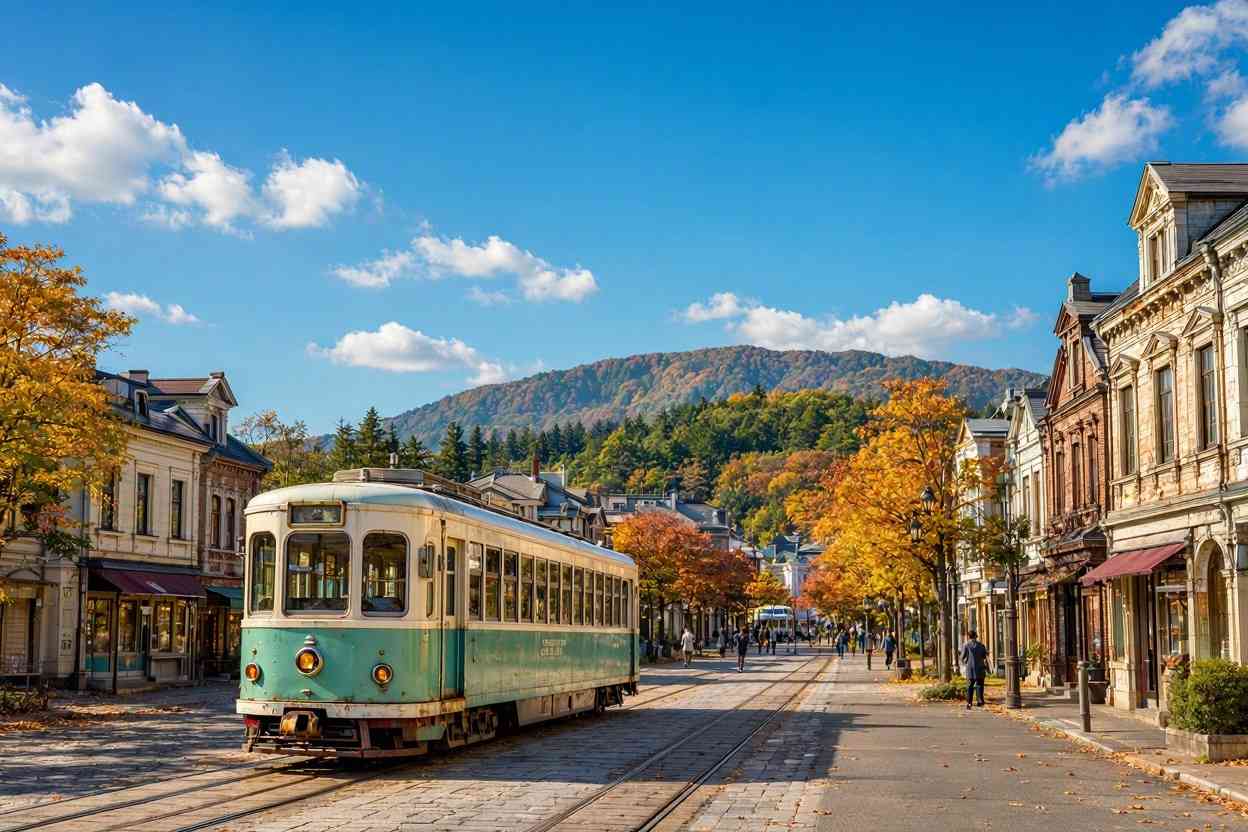
Featured image photo credit: Generated by AI
Leave a Reply