Category: Itineraries

  • The Ultimate Winter Hakodate Travel Guide: Snow, Illumination, and Cozy Comforts

    The Ultimate Winter Hakodate Travel Guide: Snow, Illumination, and Cozy Comforts

    Overview

    If you have never seen Hakodate in winter, imagine this: fresh snow covering the old streets, warm yellow lights glowing from historic buildings, steam rising from a hot bowl of ramen, and the sea sitting quietly beyond the city.

    That is winter in Hakodate.

    Hakodate is in southern Hokkaido, so its winter can feel a little gentler than some of the colder parts of Hokkaido, but the city still gets proper snow and freezing temperatures. December through February brings snowy streets, winter illuminations, seasonal seafood, hot springs, and some of the most beautiful evening scenery of the year.

    What I love most is how easy it is to combine different winter experiences in one trip. You can spend the afternoon walking around historic Motomachi, watch the lights come on as the sky turns blue, warm yourself with soup or ramen, and finish the evening soaking in a hot spring.

    Then there is the snow.

    When snow starts falling around Hakodate’s old churches, red-brick warehouses, and steep streets, the city can feel almost like a movie set. The lights reflect off the snow, footsteps become softer, and even familiar sightseeing spots look completely different.

    If you are planning a winter trip to Hokkaido, Hakodate deserves more than a quick stop.

    青い光に覆われた公園を歩く人々のグループ

    Winter Highlights and Romantic Illuminations

    Hakodate Christmas Fantasy: The Giant Christmas Tree by the Bay

    If you visit Hakodate in December, put Hakodate Christmas Fantasy at the top of your evening plans.

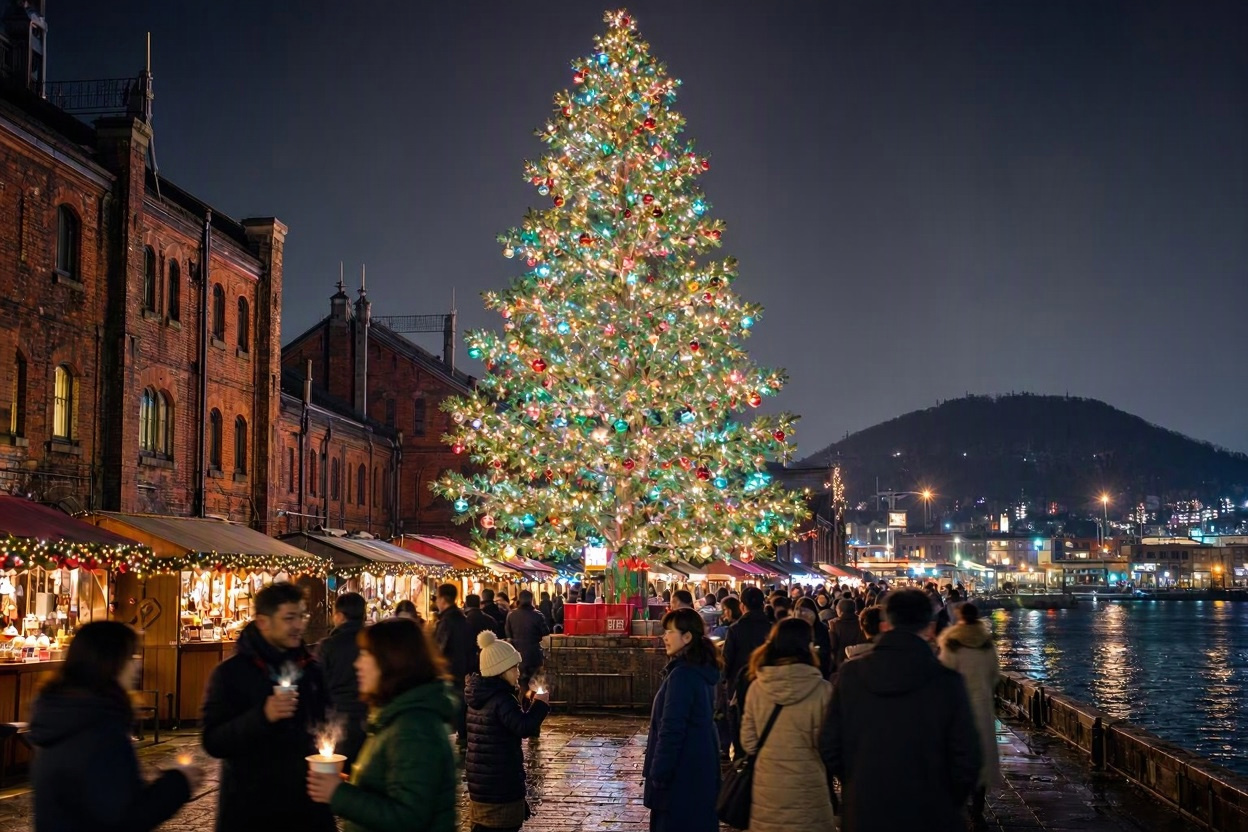
    The event takes place in the Bay Area, where a huge Christmas tree is placed on a barge in the water in front of the Kanemori Red Brick Warehouses. More than 50,000 lights illuminate the tree, while the surrounding waterfront buildings glow against the winter darkness.

    The traditional event period is December 1 through December 25, although the exact annual schedule can change, so check the official event information before your trip. The official 2025 schedule, for example, ran from November 29 through December 25.

    The most exciting part is the evening lighting and fireworks.

    On the established schedule, fireworks are launched at 6:00 PM, making this a great time to arrive early, find a good viewing position, and watch the waterfront change from blue hour to full darkness. Special red-tree lighting has also been part of recent editions.

    I recommend arriving before the main lighting. Walk around the red-brick warehouses first, grab something warm to drink or eat, and then head toward the waterfront.

    There is something incredibly satisfying about holding a hot cup of soup while looking at a giant Christmas tree floating in the dark bay with snow falling around you.

    The event area also has soup bars, which makes perfect sense in Hakodate’s winter weather. A hot bowl of soup after standing outside in the cold can honestly feel like part of the attraction itself.

    Hoshi no Yume: Goryokaku Becomes a Giant Star

    Goryokaku is already one of Hakodate’s most recognizable sights because of its unusual five-pointed star shape.

    Winter adds another layer.

    During the Hoshi no Yume Illumination, lights are placed around the moat surrounding the fortress, outlining the star shape after sunset. The official tourism guide says around 2,000 light bulbs are used for the illumination, which traditionally runs from December 1 through late February.

    The best way to understand the shape is from above.

    From Goryokaku Tower, the illuminated fortress appears as a huge glowing star surrounded by snowy streets. On the ground, you can also walk along the moat and experience the lights from a much closer perspective.

    The atmosphere changes depending on the weather.

    If there is fresh snow, the white landscape makes the lights stand out beautifully. If the moat is not completely covered with snow, reflections can appear on the water. The official tourism guide also notes that the view can shift from a bluish color just after sunset to a darker, more dramatic scene later in the evening.

    One practical point: the illumination and Goryokaku Tower operating hours are not exactly the same. The illumination can continue after the tower closes, so check the current tower schedule if you want to see the star from above.

    Hachimanzaka and the Winter Streets of Motomachi

    You do not need a special event to enjoy Hakodate’s winter lights.

    Some of my favorite winter moments come from simply walking through Motomachi after sunset.

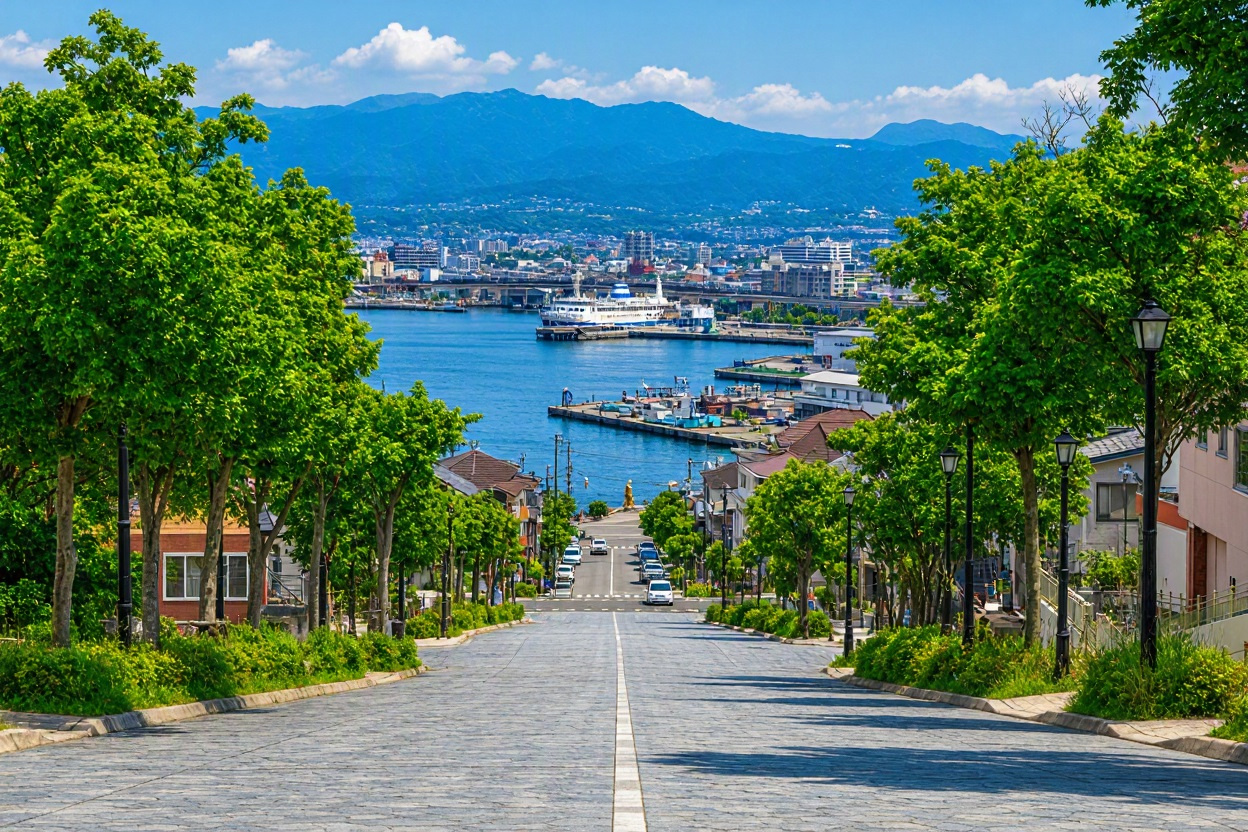
    Hachimanzaka is especially beautiful. The steep road leads toward the sea, and during winter the surrounding buildings, trees, and pavement can be covered with snow while the waterfront lights appear in the distance.

    Nijukkenzaka and other streets around the historic district are also part of Hakodate’s winter illumination program. The city’s official guide says these areas, along with parts of the Bay Area, are generally illuminated from around 5:00 PM to 10:00 PM during the winter illumination season.

    This is where Hakodate feels different from a typical winter resort.

    You are not just looking at snow.

    You are walking through a historic port city with churches, old Western-style buildings, stone streets, slopes, harbor views, and warm lights appearing through the snow.
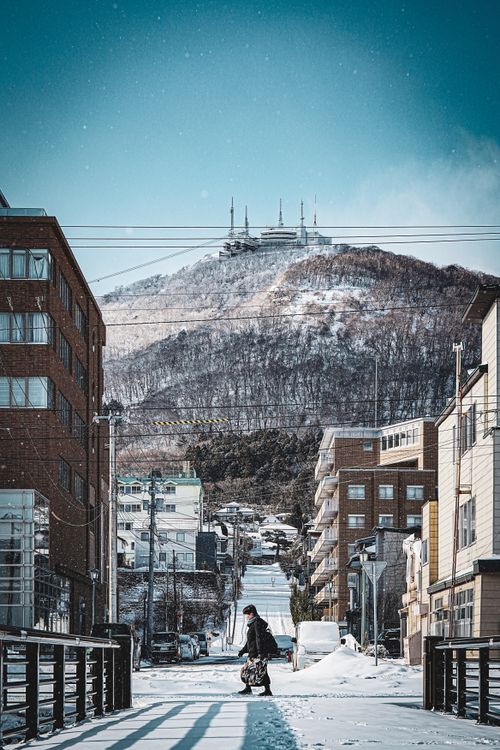
    無料 澄み渡る空の下、背景に函館山を望む、雪に覆われた日本の函館の街並み。 写真素材

    Cozy Winter Comforts: Hot Springs and Food

    A Snowy Outdoor Bath at Yunokawa Onsen

    After spending a few hours outside in winter, there is one word that starts sounding very attractive:

    Onsen.

    Yunokawa Onsen is one of Hakodate’s best places to experience that feeling.

    The area is easy to reach from central Hakodate by tram, and it is also close to Hakodate Airport. There are many hotels and traditional Japanese inns with their own hot spring baths.

    If you can book a room with an outdoor bath or stay at a ryokan with an open-air public bath, winter is the season to enjoy it.

    Imagine stepping outside into freezing air while your body is surrounded by warm mineral-rich water. Snow is falling quietly around you. Your hair gets cold, but your shoulders stay warm. The air is completely different from the bath water, and the contrast makes the experience unforgettable.

    That is the magic of a winter yukimiburo, or snow-viewing bath.

    You do not even have to book an expensive ryokan to get a small taste of the Yunokawa experience. There is a free public footbath near the Yunokawa Onsen tram stop, open from 9:00 AM to 9:00 PM on regular days.

    And there is another famous winter sight nearby.

    At Hakodate Tropical Botanical Garden, Japanese macaques can be seen soaking in a hot spring during the colder months. The bathing-monkey season generally runs from December into spring, although dates and viewing conditions can change.

    What to Eat When Hakodate Is Freezing

    Winter is also a great excuse to eat your way through Hakodate.

    Seafood is a major part of the city’s food culture, and the official tourism guide specifically recommends winter seafood such as tuna, oysters, Atka mackerel, and sea urchin.

    If you love crab, keep an eye out for local seafood restaurants and markets serving crab dishes, including king crab when available. Fresh scallops are another excellent choice.

    And then there is ramen.

    Hakodate is famous for shio ramen, or salt-flavored ramen. Unlike some heavier ramen styles, Hakodate’s traditional version often has a clear, lighter broth. After walking outside in freezing weather, a steaming bowl of shio ramen can be exactly what you need.

    I also recommend trying Hokkaido-style soup curry.

    It is not exclusive to Hakodate, but it is a fantastic winter meal: spicy broth, vegetables, meat or seafood, and enough heat to warm you from the inside.

    If you are staying around Hakodate Station, the morning market is another easy place to explore. Hakodate Asaichi has more than 300 stores selling seafood and other local products, and seafood rice bowls are one of the area’s classic meals.

    For a winter trip, I would not try to eat everything in one day.

    Give yourself time for a seafood breakfast, ramen for lunch, soup curry on another day, and a relaxed seafood dinner after an onsen.

    That is a much better way to experience Hakodate.

    Make Your Hotel Part of the Winter Experience

    In summer, your hotel can simply be a place to sleep.

    In winter, I think the hotel becomes part of the trip.

    After walking through snow for several hours, being able to return to a warm room, dry your gloves, take a hot bath, and relax without rushing makes a huge difference.

    If you are planning a winter visit, take a look at our hotel guide:

    ⇒ Check the 10 Best Hotels in Hakodate for a Cozy Winter Stay

    For a romantic trip, I would look for a hotel with an onsen or a good city view. For families, a spacious room and easy access to transportation can be more important. If you plan to spend several evenings outside, staying somewhere close to the tram network can save you a lot of walking in bad weather.

    Essential Tips for Surviving a Hakodate Winter

    Winter Hakodate is beautiful, but you need to prepare for it.

    The official tourism guide lists average temperatures of around -0.1°C in December, -2.4°C in January, and -1.8°C in February. Average minimum temperatures are colder, reaching about -6°C in January. Nighttime temperatures stay below freezing during the winter months.

    Here are the practical things I would tell a friend before they leave.

    Real Tip #1: Buy Ice Spikes for Your Shoes

    This is one of the most important tips for first-time winter visitors.

    Hakodate has several beautiful slopes, especially around Motomachi. Those slopes can become extremely slippery when snow gets compressed into ice.

    Normal sneakers are a bad idea.

    Buy removable ice spikes or anti-slip shoe grips from a convenience store, outdoor shop, or other local retailer after you arrive if you need them. Put them on before walking around the slopes.

    They are small, easy to carry, and can make a huge difference.

    Do not assume that because you can walk normally on snow, you can walk normally on an icy slope.

    Fresh snow is one thing.

    Hard, polished ice under a thin layer of snow is completely different.

    Real Tip #2: Protect Your Phone Battery

    Cold weather can make smartphone batteries drop much faster than you expect.

    This matters because your phone is probably doing everything during your trip: maps, translation, train and tram information, restaurant searches, photos, tickets, and emergency communication.

    Keep your phone inside an inner pocket rather than an outside coat pocket.

    Bring a portable power bank and keep that warm too. If your phone suddenly shows a very low battery after spending an hour outside, do not panic. Put it somewhere warm and give it some time before assuming the battery is completely dead.

    This is especially important if you plan to photograph the Christmas Fantasy, Goryokaku illumination, or the Mount Hakodate night view.

    Real Tip #3: Wear Waterproof Boots, Not Just Warm Shoes

    Warmth is only half the problem.

    Snow melts. Slush appears. Water collects around roads and sidewalks. Your feet can get cold very quickly if your shoes become wet.

    The official Hakodate winter guide recommends thick coats and waterproof boots for winter travel.

    I would also wear wool or thermal socks and carry an extra pair if you are going to spend a long time outdoors.

    There is nothing romantic about walking through a beautiful winter city with freezing wet socks.

    Real Tip #4: Dress in Layers

    Do not simply buy the biggest, thickest coat you can find.

    Layers are much more useful.

    Wear a thermal base layer, a warm middle layer, and a wind-resistant outer coat. Add gloves, a hat, and a scarf.

    This lets you adjust your clothing when you move between the freezing streets and heated restaurants, shops, trains, and hotels.

    And remember that the top of Mount Hakodate can feel much colder than the city streets. If you are planning a winter night view, bring extra warmth even if the weather feels comfortable downtown.

    Real Tip #5: Give Yourself Extra Travel Time

    Snow changes the pace of a trip.

    You may need longer to walk because of slippery sidewalks. Trams and buses can be affected by winter road conditions, and a short walk can take much longer when you are carefully stepping over icy sections.

    The Hakodate tram is still one of the most useful ways to move around the city in winter, but you should always check the latest transportation information on the day you travel.

    My rule is simple:

    Never build a winter itinerary where one delayed tram ruins your entire evening.

    Leave some breathing room between sightseeing stops.

    That way, if you spend an extra 20 minutes taking photos in the snow or warming up with ramen, your day still works.

    FAQ

    What are winter temperatures like in Hakodate, and what should I wear?

    December averages around -0.1°C, January around -2.4°C, and February around -1.8°C. Average low temperatures can reach about -6°C in January, and nighttime temperatures are generally below freezing.

    Wear layers, a warm winter coat, gloves, a hat, and a scarf. Waterproof winter boots are strongly recommended, especially if you plan to walk around Motomachi or other snowy areas.

    For long evening sightseeing, especially Mount Hakodate, dress warmer than you think you need.

    Does public transportation work when it snows?

    Yes, Hakodate’s tram remains an important way to move around the city during winter, and many major sightseeing areas are accessible by tram.

    However, heavy snow and icy conditions can affect travel times, and walking itself can become slower.

    Check the latest service information on the day of your trip and avoid planning extremely tight connections.

    The tram is especially useful for connecting central Hakodate with areas such as Motomachi and Yunokawa. Yunokawa Onsen is roughly 30 minutes from Hakodate Station by tram.

    Is Hakodate worth visiting in winter if I do not like extreme cold?

    Yes, as long as you plan around the weather.

    You do not have to spend the entire day outside. One of the best things about winter Hakodate is the balance between outdoor scenery and warm indoor experiences.

    You can walk through the snowy streets for an hour, stop for coffee, visit a museum or shop, eat ramen, return to your hotel, and then go out again for the evening illuminations.

    Winter is also a great time to enjoy Yunokawa Onsen and seasonal seafood.

    If you are sensitive to cold, December can feel easier than the heart of January or February, while January and February offer a stronger chance of seeing the city covered in snow. Exact snowfall and conditions vary from year to year.

    Summary

    Winter Hakodate is not just a colder version of the city.

    It is a completely different Hakodate.

    The snow changes the old streets of Motomachi. Hachimanzaka glows beneath winter lights. Goryokaku becomes a giant star after dark. The Bay Area comes alive with the enormous Christmas tree of Hakodate Christmas Fantasy. Snow-covered streets lead you toward warm restaurants, steaming ramen, fresh seafood, and relaxing hot springs.

    And then there is that perfect winter moment when you have been outside long enough to feel the cold in your cheeks, you step into a warm restaurant, and the first thing you hear is the sound of a steaming bowl being placed on the table.

    That is when winter Hakodate really makes sense.

    Come prepared with waterproof boots, layers, ice grips, and a backup battery. Leave extra time in your schedule. Check event and transportation information before you go.

    Then slow down.

    Walk through the snow. Watch the lights. Eat something hot. Soak in an onsen. Let the city show you its winter side.

    Hakodate in winter can be cold, but that is also what makes the warm moments feel so good.

    Featured image photo credit: Free Stock Photo
  • The Perfect 3-Day Hakodate Itinerary for First-Time Visitors

    The Perfect 3-Day Hakodate Itinerary for First-Time Visitors

    Overview

    If you are visiting Hakodate for the first time, I would give yourself two nights and three full days.

    You can certainly see Hakodate in one night. You can even rush through the highlights in a day. But that is not how I like to travel here.

    Hakodate rewards you when you slow down.

    With three days, you have enough time for the seafood and noise of Hakodate Morning Market, the old warehouses and harbor, the famous night view from Mount Hakodate, the star-shaped Goryokaku fortress, and the quiet streets of Motomachi. More importantly, you can finish the second day in Yunokawa Onsen instead of spending the entire trip jumping from one sightseeing spot to another.

    That extra night changes the feeling of the trip.

    You can eat a proper Japanese dinner, put on a yukata, soak in a hot spring, sleep well, and wake up without immediately thinking about your next train.

    This itinerary is designed for first-time visitors who want the famous Hakodate sights but also want to taste the city, hear its trams, smell the sea air, and leave enough space for a really good meal.

    夜の街の空中写真

    Day 1: Seafood Markets, Historic Canals, and Japan’s Best Night View

    7:30–9:00 AM — Start With Hakodate Morning Market

    I like starting a Hakodate trip with food.

    Hakodate Morning Market is right beside Hakodate Station, so it is easy to reach even if you have just arrived by train. The market has around 250 shops selling seafood, vegetables, fruit, sweets, and other local products. Seafood rice bowls are one of the big reasons visitors come here. (hakodate.travel)

    Walk around before choosing your breakfast.

    You will hear vendors calling out, smell grilled seafood, see tanks filled with live seafood, and find more choices than you probably expected. Then sit down for a bowl of rice covered with sea urchin, salmon roe, crab, squid, or other fresh seafood.

    This is not a breakfast I would rush.

    If you arrive early, you also have more time to explore before the city gets busy. Market opening times vary by shop and season, so check your chosen restaurant before heading out. (hakodate.travel)

    9:00–10:00 AM — Walk Around the Station and Waterfront

    After breakfast, take a slow walk around the waterfront.

    You do not need a strict sightseeing target yet. Let yourself get used to Hakodate. The harbor, old warehouses, fishing boats, and wide streets give the city a very different feeling from Tokyo or Osaka.

    This is also a good time to drop your luggage at your hotel if your room is not ready.

    10:30 AM–2:00 PM — Kanemori Red Brick Warehouses and the Bay Area

    Next, head toward the Kanemori Red Brick Warehouses.

    The Bay Area is one of the easiest parts of Hakodate to explore on foot. You can browse shops, look over the harbor, stop for coffee, and take photographs without constantly checking the time.

    This is also where I would slow the itinerary down.

    Have lunch. Buy a small souvenir. Sit outside if the weather is good. Walk along the water.

    If you are staying at a hotel such as La Vista Hakodate Bay, this is a convenient area to base yourself because you are close to the harbor, restaurants, and several major sightseeing spots.

    2:00–4:30 PM — Check In and Take a Short Break

    Do not make the mistake of filling every minute of Day 1.

    Go to your hotel, check in, take a shower, and rest your feet.

    You are going up Mount Hakodate tonight, and the best part of the view happens after sunset. There is no prize for arriving at the mountain exhausted.

    If you still have energy, take a relaxed walk through the nearby streets or have a coffee.

    4:30–7:30 PM — Mount Hakodate Night View

    Now comes the big one.

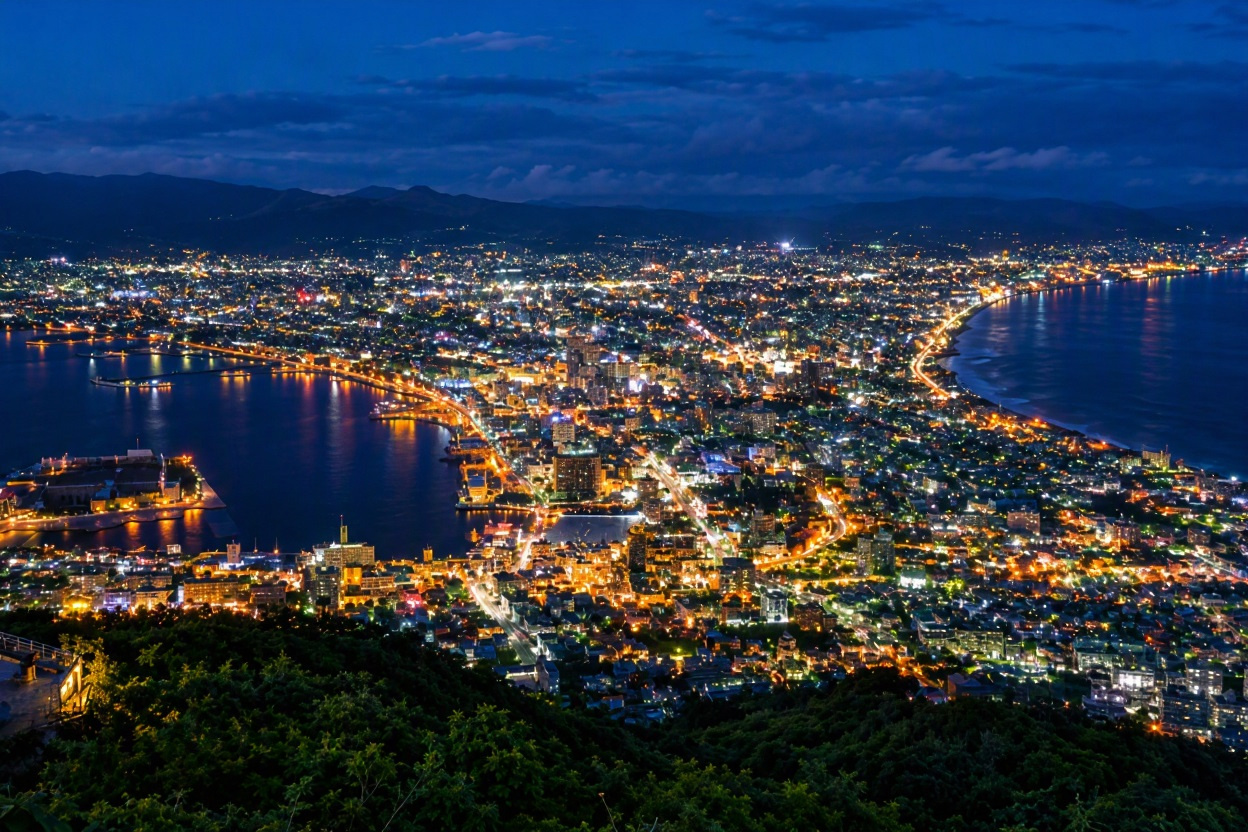
    Head toward Mount Hakodate and take the ropeway to the summit. The ropeway ride takes about three minutes, and the summit gives you the famous view of Hakodate’s narrow city shape between the surrounding waters. (hakodate.travel)

    This is one of those views that looks almost unreal in photographs.

    But seeing it in person is different.

    As the sky becomes darker, thousands of lights appear below you. The sea on both sides becomes almost black, while the city glows in a thin strip between the water.

    Give yourself time at the observation area. Do not take one photo and immediately leave.

    One important thing: access and ropeway schedules change with the season, and the ropeway can close for maintenance. Current official information also shows that road access has seasonal restrictions. Check the latest Mount Hakodate access information on the day of your visit. (hakodate.travel)

    8:00 PM — Dinner and a Relaxed Evening

    After coming down from Mount Hakodate, have dinner around the Bay Area, Hakodate Station, or Daimon.

    You do not need another major attraction tonight.

    Try sushi, grilled seafood, ramen, or an izakaya. Hakodate is famous for seafood, but the city also has a strong local food culture beyond seafood. (hakodate.travel)

    Then head back to your hotel.

    If you are staying near the station or waterfront, you can finish the night with a quiet walk beside the harbor.

    Check the Best Hotels in Hakodate for your first night

    Day 2: Star Fortresses, Local Hamburgers, and Luxury Onsen Relaxation

    8:00–9:00 AM — Easy Hotel Breakfast

    Take your time this morning.

    If your hotel has a good breakfast buffet, this is not the day to grab a coffee and run. Hakodate hotels are famous for seafood-heavy breakfasts, so give yourself enough time to enjoy it.

    You have a big day ahead, but there is no reason to start it hungry.

    9:30 AM–12:00 PM — Goryokaku Park and Goryokaku Tower

    Take the tram toward Goryokaku.

    Goryokaku is a star-shaped Western-style fortress and one of the most important historical places in Hakodate. The park is also famous for its cherry trees, with nearly 1,500 trees around the fortress. (goryokaku-tower.co.jp)

    Walk through the park first.

    Then go up Goryokaku Tower.

    From the observation deck, the shape of the fortress suddenly makes sense. From ground level, you see trees, paths, water, and stone walls. From above, you see the huge five-pointed star.

    If you visit during cherry blossom season, try to do both. The official tower guide specifically recommends seeing the blossoms from the ground and from the observation deck. (goryokaku-tower.co.jp)

    Allow at least two hours here. History lovers can stay longer.

    12:00–1:00 PM — Lunch at Lucky Pierrot

    Now it is time for something completely different.

    Have lunch at Lucky Pierrot.

    This local hamburger chain is part of Hakodate culture, not just a convenient fast-food stop. The company has multiple uniquely themed stores around the city, and its menu is made specifically for the local market. (luckypierrot.jp)

    Try the famous Chinese Chicken Burger if it is your first visit.

    It is messy, sweet, savory, filling, and very different from the burgers you may know back home.

    That is exactly why I like it.

    You are in Hakodate. Eat what people here actually recognize as a local specialty.

    1:00–2:00 PM — Tram Ride Toward Yunokawa

    After lunch, get back on the tram and slowly make your way toward Yunokawa Onsen.

    The tram ride itself is part of the experience.

    You are not just transferring between attractions. You get to watch Hakodate change outside the window, from the central city to quieter neighborhoods and finally toward the hot spring area.

    2:00–4:30 PM — Monkeys, Foot Baths, and Yunokawa

    If the seasonal schedule works, visit Hakodate Tropical Botanical Garden and see the famous Japanese macaques soaking in their own hot spring.

    The monkeys are especially entertaining in cold weather, when they sit in the steaming water looking almost completely relaxed. The bathing period generally runs through the colder months, but conditions can change around the time baby monkeys are born, so check the latest information before visiting. (hakodate.travel)

    Afterward, try the public foot bath near the Yunokawa Onsen tram stop.

    It is an easy way to start feeling the difference between sightseeing and onsen time.

    Take off your shoes, sit down, and let the warm water work on your tired feet.

    4:30 PM — Check In to Your Ryokan

    This is where Day 2 changes pace.

    Check into your traditional ryokan or luxury onsen hotel.

    Put your bags down.

    Change into a yukata.

    And stop looking at the clock for a while.

    Walk into the bathing area, wash properly, and step into the hot water. If your hotel has an outdoor bath facing the sea, try to visit around sunset.

    The air may be cold.

    The water is hot.

    Steam rises around your face.

    And beyond the bath, the Tsugaru Strait stretches toward the horizon.

    This is exactly why I recommend spending your second night in Yunokawa instead of returning to the station area.

    6:00–8:00 PM — Japanese Dinner and Onsen

    Take your time with dinner.

    At a traditional ryokan, you may receive several small dishes instead of one huge plate. Fresh seafood, sashimi, grilled fish, vegetables, soup, rice, and seasonal dishes may arrive one after another.

    Do not rush.

    Try a little of everything.

    Then go back to the bath.

    One of the best things about a ryokan stay is that you do not have to finish the experience after dinner. You can return to the hot spring, put on your yukata again, and spend the evening listening to the quiet hotel atmosphere.

    Read our Full Yunokawa Onsen Guide to maximize your second night

    Day 3: Romantic Slopes, Morning Trams, and Sweet Souvenirs

    7:00–8:30 AM — A Slow Start in Yunokawa

    Wake up without an alarm if your schedule allows it.

    Have breakfast at the ryokan, then take one final bath.

    This is one of the reasons I like the three-day plan. You are not forced to leave Yunokawa immediately after dinner. You actually get to enjoy the morning.

    If the weather is clear, step outside for a short walk before checking out.

    9:30–11:30 AM — Motomachi and the Historic Church Area

    After checking out, return toward central Hakodate.

    Head for Motomachi.

    This is the part of Hakodate where I would put the camera away for a few minutes and simply walk.

    The area around the old churches and historic buildings has steep streets running toward the sea. The architecture reflects Hakodate’s history as an international port, and the atmosphere is especially nice in the morning when there are fewer people.

    Take your time around the slopes.

    Then walk toward Hachiman-zaka.

    11:30 AM–12:30 PM — Hachiman-zaka Photo Stop

    Hachiman-zaka is one of Hakodate’s classic viewpoints.

    The straight road slopes down toward the harbor, creating one of the city’s most recognizable photographs.

    Do not just stand at the top for ten seconds.

    Walk partway down.

    Turn around.

    Look toward the harbor.

    Then look back up toward the historic buildings.

    If you are visiting in winter, be careful. Snow and ice can make Hakodate’s slopes extremely slippery, especially when temperatures rise during the day and freeze again later.

    12:30–2:00 PM — Café Lunch and a Quiet Break

    After walking the slopes, find a café around Motomachi, Bay Area, or the nearby old streets.

    This is deliberately a loose part of the itinerary.

    You have already seen the big attractions.

    Now sit down.

    Have coffee, cake, curry, pasta, or a light Japanese lunch. Hakodate has plenty of Western-style food because of its long port-city history, so this is a good time to try something different.

    2:00–3:30 PM — Souvenirs and Snaffle’s Cheese Omelette

    Before leaving, pick up a few edible souvenirs.

    Snaffle’s Cheese Omelette is an easy choice if you like soft cheesecake. The dessert was created in Hakodate in 2000 and has a light, smooth texture that almost melts in your mouth. (snaffles.jp)

    There is also a Snaffle’s store inside JR Hakodate Station, which is useful if you want to wait until the final part of your trip to buy souvenirs. (snaffles.jp)

    Just remember that Cheese Omelette needs refrigeration and has a relatively short shelf life, so buy it with your travel route in mind. (snaffles.jp)

    3:30 PM and Later — Leave Hakodate Without Rushing

    If you are catching a train, return to Hakodate Station.

    If you are flying, allow enough time to get to Hakodate Airport.

    The goal is not to squeeze in one more attraction.

    You have already eaten seafood beside the station, walked beside the harbor, watched Hakodate sparkle from the mountain, stood above a star-shaped fortress, eaten a local burger, soaked in a hot spring, and wandered through the old slopes.

    That is enough.

    Local Tips for a Smooth 3-Day Trip

    Real Tip #1: Use an IC Card on the Tram

    If you have a nationwide IC card such as Suica or PASMO, use it.

    Hakodate’s trams accept major nationwide mutual-use IC cards, and you can touch the card when boarding and exiting. This is much easier than counting coins every time you ride. (city.hakodate.hokkaido.jp)

    If you are paying cash, remember that the fare box does not make change. Use the change machine before paying and keep some small coins available. (city.hakodate.hokkaido.jp)

    Real Tip #2: Keep Mount Hakodate Flexible

    Do not build your entire three-day trip around one exact Mount Hakodate viewing time.

    Clouds, wind, rain, snow, and visibility can completely change the experience.

    I would keep Day 1 and Day 2 flexible enough that you can move the mountain visit if the forecast looks poor. The official access information also warns that operating hours, transportation methods, and seasonal restrictions can change. (hakodate.travel)

    This small amount of flexibility can make a huge difference.

    Real Tip #3: Do Not Drag a Huge Suitcase Up Hakodate’s Slopes

    Motomachi is beautiful.

    It is also full of slopes.

    If you have a large suitcase, do not plan to walk from the station through Motomachi and Hachiman-zaka while dragging it behind you.

    Leave your luggage at your hotel, use station lockers, or arrange luggage delivery if your travel plan allows it.

    A camera bag is enough for Hachiman-zaka.

    Real Tip #4: Give the Morning Market Enough Time

    The Morning Market is not just a place to grab breakfast and leave.

    There are roughly 250 stores and eateries, and opening times vary by shop. (hakodate.travel)

    If you want a specific seafood restaurant, check its hours before going.

    And if you see something you really want to eat, do not assume it will still be available at lunchtime.

    Some seafood products are seasonal, and individual stores may close earlier than the market area itself.

    Real Tip #5: Do Not Schedule Your Train Immediately After Check-Out

    Hakodate is compact, but travel days still have surprises.

    You may want one last coffee.

    You may buy more souvenirs than expected.

    A tram may take longer than planned.

    Your suitcase may be stored at the hotel.

    Give yourself breathing room before your train or flight.

    The final afternoon should feel like the end of a holiday, not a race against the departure board.

    Real Tip #6: Consider a Tram Pass Based on Your Actual Rides

    Hakodate offers a tram one-day ticket, a 24-hour ticket, and other transport passes, while the one-day tram ticket can also be purchased on board when the tram is stopped. (city.hakodate.hokkaido.jp)

    But do not automatically buy a pass just because you are a tourist.

    For this three-day itinerary, you may use the tram heavily on some days and barely use it on others.

    Count your planned rides first, then compare the total with the current pass price.

    FAQ

    How much should I budget for a 2-night, 3-day Hakodate trip?

    There is no single correct number because hotel level changes the budget dramatically. A budget traveler can keep accommodation and meals modest, while a luxury trip with a Yunokawa ryokan, seafood dinners, and premium rooms can cost much more.

    As a practical planning point, separate your budget into four parts: hotel, food, local transportation, and attractions. Hotel and food are the two categories where your spending can change the most.

    What should I do with a large suitcase?

    Avoid carrying it around Motomachi, Hachiman-zaka, and the Bay Area all day.

    Ask your hotel to store it before check-in or after check-out, use a station locker when available, or arrange luggage delivery if your itinerary makes that useful.

    For this itinerary, I would keep only a small day bag with me while sightseeing.

    Should I buy a Hakodate tram day pass?

    It depends on how much you ride.

    A one-day tram ticket is available, and Hakodate also offers a 24-hour ticket and combination transport tickets. (city.hakodate.hokkaido.jp)

    If you plan several tram rides in one day, a pass may be convenient. If you are walking most of the day, simply paying with an IC card can be easier.

    Summary

    Three days in Hakodate gives you something that a rushed weekend does not: time.

    Time to hear the tram bell while watching the city pass outside the window.

    Time to smell grilled seafood at the Morning Market.

    Time to stand quietly above the lights of Hakodate from the mountain.

    Time to look down at a giant star-shaped fortress.

    Time to bite into a messy Lucky Pierrot burger.

    And time to sit in a hot spring at Yunokawa while cold sea air touches your face.

    That is the Hakodate I want first-time visitors to experience.

    Do the famous sights, absolutely.

    But leave enough space between them to notice the small things. The sound of the harbor. The smell of breakfast. The warmth of an onsen. The soft sweetness of a Cheese Omelette on the way home.

    Those are the moments that stay with you.

    Featured image photo credit: Generated by AI

  • The Ultimate Hakodate Travel Guide for First-Time Visitors

    The Ultimate Hakodate Travel Guide for First-Time Visitors

    Overview

    If you are visiting Hokkaido for the first time, put Hakodate on your map.

    I know Sapporo gets a lot of attention. I know people talk about ski resorts, huge mountains, and famous seafood towns. But Hakodate has something that feels completely different.

    It is a port city with a long international history, old Western-style buildings, Japanese temples, seafood markets, trams, churches, hills, hot springs, and one of Japan’s most famous night views. You can eat a bowl of fresh seafood in the morning, walk through a historic neighborhood in the afternoon, and watch the city lights sparkle between two seas at night.

    That is a pretty good day.

    Hakodate opened its port to international trade in the 19th century, and you can still see the results when you walk around the city. Old churches and Western-style buildings sit close to Japanese temples and traditional streets. The city does not feel like a museum, either. Trams still run through the middle of town, fishermen still bring seafood to market, and locals still use the same streets visitors come to photograph.

    I especially like Hakodate because it is easy to explore without rushing.

    You can spend a morning around Goryokaku, take the streetcar toward Motomachi, stop for coffee, walk down Hachiman-zaka, eat seafood near the bay, and finish the day on Mount Hakodate.

    Then, when your feet are tired, you can soak in Yunokawa Onsen.

    This guide is your starting point for the whole Hakodate cluster. Each place below deserves its own detailed guide, so think of this article as your main map before you decide where to go.

    One more thing: Hakodate is compact compared with many major Japanese cities, but hills, winter weather, limited bus frequencies, and the city’s shape can make a simple-looking itinerary take longer than expected.

    Give yourself some breathing room.

    You will enjoy the city much more that way.

    日中の水域近くの緑の木々

    Top Things to Do in Hakodate

    Goryokaku — A Star-Shaped Fortress With a Big Story

    Goryokaku is one of the first places I would visit in Hakodate.

    At ground level, it looks like a large green park surrounded by a moat. From above, the shape suddenly makes sense: a huge five-pointed star.

    Goryokaku was built in the final years of the Edo period as a Western-style fortress. It later became the stage for the Battle of Hakodate, one of the final conflicts of the Boshin War. The restored Hakodate Magistrate’s Office stands inside the fort, giving visitors a chance to see part of that history up close.

    The best way to understand the shape is from Goryokaku Tower. From the observation deck, the star-shaped moat spreads out below you.

    Then go back down and walk.

    In spring, roughly 1,500 cherry trees fill the park with pink blossoms. You can walk around the moat, enjoy the flowers, and even see locals having a seasonal barbecue in designated areas.

    In summer, the park becomes green and relaxing. Autumn brings warmer colors, while winter gives the fortress a completely different look under snow.

    Don’t just take the tower photo and leave.

    Walk around the park afterward. The contrast between the geometric fortress and ordinary trees, water, birds, and people enjoying the park is part of the experience.

    Read more: Goryokaku Fortress Guide

    Mount Hakodate — The Night View You Came For

    Let’s be honest.

    At some point, you are probably going to look at photos of Hakodate’s night view and think, “Is it really that good?”

    Yes, but the experience is about more than the photograph.

    From Mount Hakodate, the city appears as a narrow strip of land between Hakodate Bay and the Tsugaru Strait. At night, thousands of lights form a bright line between the dark water on both sides.

    When the weather is clear, the view can be astonishing.

    The best moment is not always the darkest part of the night. I like arriving before sunset when possible. You can watch the sky change from blue to purple and then see the city lights gradually appear.

    That transition gives you a much better sense of the geography.

    There is one catch: everyone else knows how good the view is.

    At popular times, the summit can become very crowded. Weather can also ruin the view. A cloudy evening can turn the famous panorama into a wall of gray.

    So check the forecast before heading up, and don’t treat the mountain as a guaranteed photo stop.

    If the conditions are poor, you can simply change your plan and come back another evening.

    Read more: Mount Hakodate Night View Guide

    Hakodate Morning Market — Start the Day With Seafood

    Wake up early.

    Seriously.

    Hakodate Morning Market is one of those places where getting out of bed at 7 a.m. is actually worth it.

    The market is close to Hakodate Station, making it easy to visit at the beginning of a sightseeing day. The atmosphere is lively, with seafood shops, restaurants, and vendors offering products from the surrounding waters.

    You may see squid, crab, sea urchin, salmon roe, and other seafood depending on the season.

    And then comes breakfast.

    A seafood rice bowl is an obvious choice, but don’t feel like you have to order the biggest bowl in the building. Sometimes a smaller meal followed by a second stop later in the morning is more fun.

    The smell is part of the experience.

    So is the noise: conversations, restaurant staff, cooking sounds, and the movement of people buying seafood.

    If you are not used to eating seafood for breakfast, give it a try.

    You are in Hakodate.

    This is your chance.

    One practical warning: popular restaurants can get busy, and individual shops may have different opening hours. If there is one specific restaurant you absolutely want to try, check its current hours before you build your morning around it.

    Read more: Hakodate Morning Market Guide

    Kanemori Red Brick Warehouses — Hakodate’s Waterfront

    After the morning market, walk toward the bay.

    The Kanemori Red Brick Warehouses are one of the easiest places in Hakodate to combine shopping, food, history, and waterfront scenery.

    The red-brick buildings reflect Hakodate’s history as an international port. Today, the area has shops, restaurants, cafes, and spaces where you can slow down and enjoy the harbor.

    I like coming here in the late afternoon.

    The light becomes softer.

    The brick buildings become warmer in color.

    The water catches the last daylight.

    Then the lights come on.

    In winter, this area becomes the setting for Hakodate Christmas Fantasy, with a giant Christmas tree floating in the bay. The 2026 event is scheduled for December 1 through December 25, with evening fireworks and special lighting displays.

    You can easily combine the warehouses with a walk through the nearby Motomachi area.

    Motomachi Slopes — Where Hakodate’s History Feels Real

    Motomachi is where I would slow down.

    This hillside neighborhood contains historic churches, old Western-style buildings, traditional Japanese architecture, small shops, and streets that lead toward the harbor.

    Hakodate’s international history is easy to see here.

    You don’t need a complicated sightseeing plan.

    Walk.

    Look up at the buildings.

    Look down toward the sea.

    Stop when you find a cafe that looks interesting.

    The slopes can be steeper than they look in photographs, so comfortable shoes matter.

    This is also a good area to visit when you want photographs that feel more personal than the standard tourist shots. Early morning can be especially peaceful before the streets become busy.

    Hachiman-zaka — The Classic Hakodate View

    Hachiman-zaka is probably one of the most recognizable streets in Hakodate.

    The road slopes downhill toward the harbor, creating a straight visual line between the city and the water.

    Stand near the top and look down.

    You get the road, trees, old buildings, and sea in one frame.

    It is beautiful in every season, but the feeling changes with the weather.

    On a clear summer day, the harbor looks bright and blue.

    In autumn, the trees add warm colors.

    In winter, snow can cover the road and make the scene feel much quieter.

    There is a practical side to this famous view too.

    The slope can become extremely slippery in winter.

    More on that later, because it is one of the most important real-life tips I can give first-time visitors.

    Trappistine Convent — A Quiet Side of Hakodate

    The Trappistine Convent is a good choice when you want a break from busy sightseeing.

    Founded in 1898, it is Japan’s first women’s Trappist convent. The present church building dates from 1927 and features Gothic and Romanesque influences. Visitors can enjoy the front garden, museum, and shop, while the convent itself remains a private religious space.

    The atmosphere changes as soon as you arrive.

    The city feels far away.

    There are trees, brick buildings, quiet paths, and much less noise.

    The shop is also worth a look. The convent is known for sweets such as Madalena cakes.

    Don’t expect a large attraction with dozens of things to do.

    That is not the point.

    Come here when you want an hour or two of quiet.

    The site is also a useful reminder that Hakodate is not only about seafood and night views. There is a softer, more reflective side to the city.

    Yunokawa Onsen — End the Day in Hot Water

    After walking up and down Hakodate’s hills, Yunokawa Onsen can feel like a reward.

    The hot spring area is close to central Hakodate and Hakodate Airport, making it especially convenient for international travelers.

    You can stay in a traditional Japanese ryokan, enjoy a hot bath, put on a yukata, and have dinner without needing to go back into the busy center of town.

    In autumn and winter, the contrast is wonderful.

    Cold air outside.

    Warm water inside.

    Steam rising around you.

    Your shoulders finally relax.

    That is one of my favorite ways to finish a Hakodate day.

    If you are planning a first visit, don’t think of Yunokawa as just another hotel district. It can be part of the actual Hakodate experience.

    Read more: Yunokawa Onsen Guide

    Getting Around Hakodate

    The Streetcar Is Your Friend

    For first-time visitors, the Hakodate streetcar is one of the easiest ways to understand the city.

    It connects important sightseeing areas, including the Hakodate Station area, the bay, Motomachi, and Goryokaku.

    And there is something fun about it.

    You are not sitting underground.

    You are watching Hakodate move past your window.

    Old buildings.

    Shops.

    People walking to work.

    Snow in winter.

    Green trees in summer.

    It feels like part of the city rather than just transportation.

    For current travel, commonly used Japanese transportation IC cards such as Suica, PASMO, Kitaca, ICOCA, and others covered by the nationwide system can be used on Hakodate trams and Hakodate buses. Hakodate’s own ICAS nimoca is also accepted.

    When using an IC card on the tram, touch the reader when boarding and touch it again when leaving. You do not need to take a numbered ticket when using an accepted IC card.

    There are also day passes and combined tram-and-bus passes, so check the current fares and conditions if you expect to ride several times in one day. Pass prices and products can change.

    A Simple Sightseeing Flow

    If you want a simple route, think of Hakodate in zones.

    Morning: Hakodate Morning Market and Hakodate Station.

    Late morning: Kanemori Red Brick Warehouses and the bay.

    Afternoon: Motomachi, the churches, and Hachiman-zaka.

    Evening: Mount Hakodate if the weather is good.

    Night: Yunokawa Onsen.

    Another day can be used for Goryokaku, the Trappistine Convent, and other areas outside the central waterfront.

    You don’t need to force every attraction into a single day.

    雪に覆われた通りを走る赤いトラム、港を背景に

    From Tokyo to Hakodate

    The Hokkaido Shinkansen connects Tokyo with Shin-Hakodate-Hokuto. The fastest scheduled Tokyo–Shin-Hakodate-Hokuto journey is currently listed at 3 hours 57 minutes. From Shin-Hakodate-Hokuto, the Hakodate Liner connects with Hakodate Station in as little as 15 minutes, with travel times generally listed at 15–22 minutes.

    That means you can build Hakodate into a larger rail trip around Japan without flying.

    If you are already in Tokyo and enjoy train travel, it is a very straightforward option.

    Flying to Hakodate Airport is another practical choice, especially if you are coming from another Japanese city or want to save time.

    From Sapporo

    The limited express Hokuto connects Sapporo and Hakodate. JR Hokkaido currently lists all seats on its limited express trains as reserved, so check the current train and reservation details before traveling.

    Once you arrive in Hakodate, you can switch to the streetcar, bus, taxi, or walk depending on your destination.

    Best Seasons to Experience Hakodate

    Spring — Goryokaku Turns Pink

    Spring is one of the most exciting times to see Hakodate.

    Goryokaku Park has around 1,500 cherry trees, and when they bloom, the star-shaped fortress becomes surrounded by pink. You can see the flowers from ground level or from Goryokaku Tower.

    The weather can still feel chilly.

    In 2026, Hakodate’s official cherry blossom opening was announced on April 18, with full bloom around April 20–21 depending on the source and forecast. Dates change every year, so use current forecasts rather than copying a date from an old travel guide.

    Bring a jacket.

    Seriously.

    You can be surrounded by beautiful pink blossoms while your hands are still cold.

    Summer — Hakodate Gets Loud and Lively

    Summer brings green trees, longer days, outdoor walks, and festivals.

    The Hakodate Port Festival is the city’s major summer festival, filling the city with events and performances. The 2026 festival was scheduled for August 1–5.

    This is a great season for walking around the bay and Motomachi.

    The downside?

    Crowds and heat.

    You may also find that a sea breeze makes evenings cooler than expected, so carrying a thin jacket is still useful.

    Autumn — Eat, Walk, Repeat

    Autumn is a very comfortable time to explore Hakodate.

    The air gets cooler, the crowds can feel easier to handle, and seasonal food becomes a big part of the trip.

    This is when I like taking long walks through Motomachi, visiting Goryokaku, eating seafood, and heading to the waterfront when the afternoon light gets softer.

    The smell of the sea mixes with cool air.

    Leaves change color.

    You start thinking about hot springs.

    It feels like Hokkaido.

    Winter — Snow and Christmas Lights

    Winter gives Hakodate a completely different personality.

    Snow can cover the streets and hills, and the cold air makes hot food and hot springs feel even better.

    The Kanemori Red Brick Warehouses host Hakodate Christmas Fantasy, centered around a giant Christmas tree floating in the bay. The event includes evening fireworks and special lighting, creating a bright scene against the cold winter waterfront.

    For 2026, the event is scheduled for December 1–25.

    The winter sea breeze can be brutal, though.

    Wear proper shoes and warm layers.

    You will thank yourself later.

    Local Tips for First-Time Visitors

    Real Tip #1: Winter Hills Are Much More Slippery Than They Look

    This is the kind of thing that photographs never show you.

    Hachiman-zaka can look like a simple walk downhill.

    After snow or freezing temperatures, it can become a sheet of ice.

    The same applies to other sloped streets around Motomachi.

    Do not wear smooth-soled fashion sneakers just because they looked fine when you left your hotel.

    If you visit in winter, wear shoes with good grip. Walk slowly, keep your hands free when possible, and don’t stare at your phone while going downhill.

    It sounds obvious.

    Then you see someone nearly fall.

    Don’t be that person.

    Real Tip #2: Learn the Streetcar Payment Routine Before Boarding

    Hakodate’s streetcars are easy once you understand the system, but the first ride can feel confusing.

    With an accepted IC card, touch the reader when you board and again when you get off.

    With cash, take a numbered ticket when required, check the fare board, and prepare the exact fare. The fare box itself does not make change, although a change machine is available. Hakodate City notes that the change machine has a ¥2,000 limit.

    If you have a Suica, PASMO, ICOCA, or another accepted card, using it can make the ride much simpler.

    One important detail for mobile IC users: Hakodate’s official guidance warns that certain mobile IC cards should not be tapped against the vehicle reader when using some digital tickets. Keep your digital ticket and IC payment method separate and follow the instructions shown for the ticket you purchased.

    Real Tip #3: Don’t Assume Every Bus Runs Late

    Hakodate is not Tokyo.

    Some routes have limited service, especially outside the busiest areas.

    Before heading somewhere such as the Trappistine Convent, check your return route too.

    You don’t want to arrive at a beautiful sightseeing spot and then discover that your next bus is much later than expected.

    Take a screenshot of your return timetable.

    That tiny habit can save a lot of stress.

    Real Tip #4: Mount Hakodate Weather Can Ruin the View

    A clear blue sky in central Hakodate does not automatically mean perfect conditions at the summit.

    Cloud, wind, and visibility can change the experience.

    Check the conditions before you go.

    If the view is completely blocked, don’t waste your entire evening waiting in the cold. Change your plan and try again another time if your schedule allows.

    Real Tip #5: Wear Comfortable Shoes

    This sounds boring.

    It isn’t.

    Hakodate sightseeing involves walking up slopes, down slopes, across waterfront areas, through parks, and between tram stops.

    You can easily walk much farther than you planned.

    Good shoes will make the difference between “Let’s keep exploring” and “My feet hurt, let’s go back to the hotel.”

    FAQ

    How do I get to Hakodate from Tokyo?

    The Hokkaido Shinkansen runs from Tokyo to Shin-Hakodate-Hokuto. From there, the Hakodate Liner connects with Hakodate Station, with the current fastest connection taking about 15 minutes after the Shinkansen journey.

    Flying to Hakodate Airport is another option, especially when your Japan itinerary already includes domestic flights.

    Can I use Suica on Hakodate’s streetcars?

    Yes. Suica, PASMO, Kitaca, ICOCA, and other cards covered by Japan’s nationwide transportation IC system can be used on Hakodate trams and Hakodate buses. Hakodate’s ICAS nimoca is also accepted.

    On the tram, touch your card when boarding and again when getting off.

    If you are using a mobile ticket rather than paying with an IC card, check the instructions for that specific ticket because the two systems should not be confused.

    How many days should I spend in Hakodate?

    For a first visit, 2 to 3 full days is a comfortable starting point.

    Two days can cover the major city sights, including Goryokaku, the Morning Market, bay area, Motomachi, Hachiman-zaka, and Mount Hakodate.

    Three days gives you more time for Yunokawa Onsen, the Trappistine Convent, slower meals, shopping, cafes, and weather flexibility.

    If you want to explore more of Southern Hokkaido, use Hakodate as your base for a longer trip.

    Summary

    Hakodate is a city that rewards you for slowing down.

    Start with seafood at the morning market.

    Look down on Goryokaku from above.

    Ride a streetcar through the city.

    Walk the slopes of Motomachi.

    Stand at the top of Hachiman-zaka and look toward the harbor.

    Spend time around the red brick warehouses.

    Wait for the lights of Hakodate to appear from Mount Hakodate.

    Then finish the day in warm water at Yunokawa Onsen.

    What I love most is how naturally all these experiences fit together.

    You can see Japanese history at Goryokaku, international history around Motomachi, local life on the streetcar, the fishing culture of the market, and the sea from almost everywhere.

    In winter, the city becomes quieter and colder.

    In spring, Goryokaku turns pink.

    In summer, the streets fill with festival energy.

    In autumn, the air becomes crisp and the food gets even more tempting.

    You don’t need to race through Hakodate.

    Leave time for a second coffee.

    Stay at the waterfront after sunset.

    Walk one extra street.

    Eat something you have never tried.

    And if the weather changes your plan, let it.

    That is part of traveling here.

    Hakodate is more than a famous night view.

    It is a port city you can taste, hear, walk, and feel.

    Once you have explored the city properly, you will also have an easy starting point for the wider Southern Hokkaido region.

    That is where the next adventure begins.

    Featured image photo credit: Generated by AI

  • The Ultimate Southern Hokkaido Travel Guide

    The Ultimate Southern Hokkaido Travel Guide

    Overview

    If you are planning a trip to Hokkaido, I really hope you give Southern Hokkaido more than just a quick stop in Hakodate.

    Hakodate is famous for its beautiful night view, fresh seafood, historic streets, and hot springs. But once you leave the city, a much bigger trip opens up. You can drive along the coast, walk through an old castle town, see a volcano beside the sea, cycle around a quiet lake, visit a small fishing town, or sit in a hot spring while snow falls outside.

    That is what makes Southern Hokkaido so much fun.

    The area around Hakodate has a slower feeling than Japan’s biggest cities. The roads can run beside the sea for long stretches. Fishing boats sit in small harbors. Forests turn bright red and gold in autumn. In winter, snow covers the countryside and the smell of hot spring water fills the cold air.

    I also love the fact that you can build very different trips here.

    Want food and city sightseeing? Stay around Hakodate.

    Want nature? Go to Onuma.

    Want history? Head to Matsumae or Esashi.

    Want a road trip? Add Shikabe, Kikonai, Hokuto, and Mount Esan.

    You do not need to choose just one style.

    This guide is the starting point for exploring the whole region. Think of it as your map before you choose the smaller places you want to visit.

    And one piece of advice from the start: don’t try to see everything in one day. Southern Hokkaido looks compact on a map, but the roads, mountains, coastlines, and limited public transportation can make travel slower than expected.

    Give yourself time to stop.

    That is when this part of Japan becomes special.

    無料 長野県松本城の鮮やかな反射を映した静かな秋の景色。 写真素材

    Must-Visit Spots in Southern Hokkaido

    Hakodate — Your Best Starting Point

    For most international travelers, Hakodate is the natural front door to Southern Hokkaido.

    Start at Hakodate Morning Market and have breakfast surrounded by the smell of fresh seafood. Depending on the season, you may find squid, crab, sea urchin, salmon roe, and other seafood from the waters around Hokkaido.

    Then slow down.

    Walk through Motomachi and the old streets around the harbor. The hills make some walks a little tiring, but they also give you lovely views toward the water.

    The historic buildings and churches around Motomachi show the international history of this port city. Down by the waterfront, the red-brick warehouses give you a completely different atmosphere.

    Goryokaku is another important stop. From the observation tower, the famous star-shaped fortress is easy to understand from above. In spring, the surrounding trees become a sea of pink.

    Then comes the view that puts Hakodate on many travelers’ Hokkaido wish lists: Mount Hakodate at night.

    From the summit, the city appears as a narrow strip of lights between two dark bodies of water. On a clear evening, it is one of those views that makes everyone stop talking for a moment.

    Just remember that mountain access can change with weather, road conditions, seasonal restrictions, and maintenance. Check current information before you go rather than assuming the same transportation will operate every day.

    And don’t spend your whole Hakodate trip chasing famous viewpoints.

    Some of my favorite moments in the city would be much simpler: a quiet street, a small cafe, the smell of grilled seafood, or the sound of a tram moving through town.

    Read more: Hakodate Travel Guide

    Where to Stay in Hakodate

    Hakodate Station is a practical base if you plan to use trains and buses.

    The bay area and Motomachi are great if you want to walk around historic streets and waterfront areas in the evening.

    Yunokawa is another choice, especially if a Japanese hot spring stay is part of your travel dream.

    Think about your daily route before booking a hotel. Staying near the station can save time when you have early trains. Staying near the bay or Motomachi can make evening walks easier. Staying in Yunokawa gives you a different, slower experience.

    Check the Best Hotels in Hakodate

    Yunokawa Onsen — Warm Water After a Cold Day

    Yunokawa Onsen is one of the easiest hot spring areas to add to a Hakodate trip.

    It is close to the city and also convenient for Hakodate Airport, so you don’t need to travel deep into the countryside to enjoy a traditional Japanese hot spring stay.

    Imagine this.

    You have spent hours walking around Hakodate. Your legs are tired. The evening air is cold. You return to your ryokan, take off your shoes, put on a yukata, and step into a hot bath.

    Outside, the air is cold.

    Inside, you are warm.

    That simple contrast is a big part of the pleasure of a winter or autumn trip to Hokkaido.

    Some accommodations also have views toward the Tsugaru Strait, adding the sound and atmosphere of the sea to the experience.

    Read more: Yunokawa Onsen Guide

    Onuma Park — Lakes, Forests, and Mt. Komagatake

    If you want to escape the city without making a huge journey, put Onuma Park near the top of your list.

    Onuma Quasi-National Park is easy to reach from Hakodate by train, and the area around Onuma Koen Station is close to the park.

    The scenery is simple but beautiful: water, small islands, forest, and the large shape of Mount Komagatake.

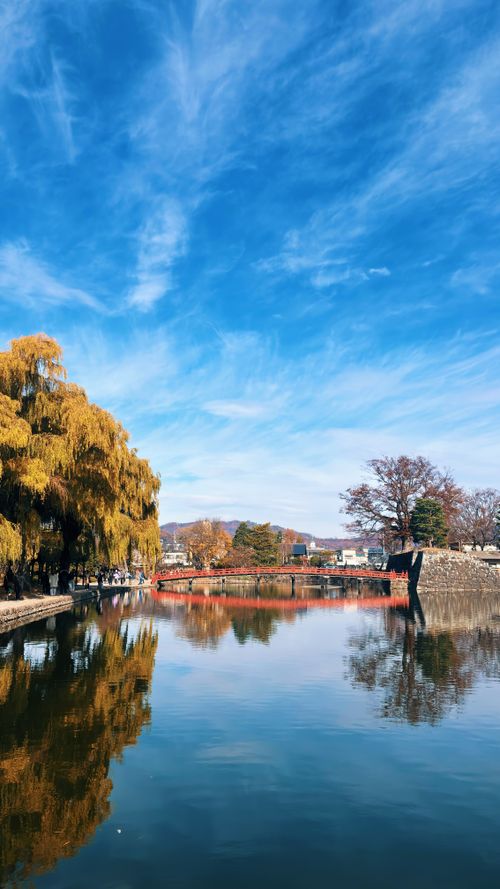
    On a calm morning, the mountain can appear on the surface of the lake like a painting.

    But you don’t need to do anything complicated.

    Walk.

    Rent a bicycle.

    Take a sightseeing boat when services are operating.

    Sit beside the water.

    In warmer months, outdoor activities make the area lively. In autumn, the forest becomes a mix of yellow, orange, and red. In winter, snow changes the whole landscape.

    Onuma is also a good choice for travelers who are not serious hikers. You can enjoy the scenery without spending the entire day climbing a mountain.

    Bring a jacket even when the weather looks comfortable in Hakodate. Open areas around the lakes can feel much cooler, especially in the morning and evening.

    Matsumae — Castle Town and Cherry Blossoms

    Matsumae takes you into a very different side of Southern Hokkaido.

    This is a historic castle town near the southern tip of the island. Matsumae Castle and the surrounding temples, streets, and historic sites tell a story that feels very different from modern Hakodate.

    Spring is the big attraction.

    Cherry blossoms cover the castle area and surrounding grounds, creating one of the most memorable spring scenes in Southern Hokkaido.

    But Matsumae is not only for cherry blossom season.

    If you enjoy Japanese history, it is worth visiting at other times of the year too. Walk slowly. Look at the old buildings. Visit the temples. Have lunch and try local seafood.

    The Tsugaru Strait has long shaped life in this area, and food is an important part of that story.

    Matsumae also makes a good road-trip destination because the journey itself becomes part of the experience. You can stop at coastal viewpoints and small towns along the way instead of treating the drive as dead time.

    Esashi — An Old Port Town Worth Slowing Down For

    Esashi is the kind of place where I would tell you to put your camera away for a few minutes and simply walk.

    The town became prosperous through herring fishing and trade with Kitamaebune merchant ships. Its old streets and buildings still reflect that history.

    The Esashi Inishie Kaido area is especially interesting for travelers who enjoy traditional townscapes and local history.

    You can also learn about Esashi Oiwake, a traditional folk song with a strong connection to the town.

    Esashi feels quieter than Hakodate, and that is part of the point.

    Don’t arrive with a list of twenty things to see.

    Walk along the old streets.

    Find somewhere to eat.

    Look toward the harbor.

    Listen to the sounds of the town.

    One practical issue matters here: transportation takes longer than many first-time visitors expect. A drive and a bus journey can have very different travel times, so check the actual route before building your day.

    Hokuto City — More Than a Shinkansen Stop

    Many visitors know Hokuto City because Shin-Hakodate-Hokuto Station is where the Hokkaido Shinkansen arrives.

    But don’t think of the area as just a place to change trains.

    Hokuto has rural landscapes, historic sites, farmland, and seasonal flowers. The Trappist Monastery and its long tree-lined approach are among the area’s better-known sights.

    Spring is especially pleasant when cherry blossoms appear, while summer brings green fields and warmer days.

    Hokuto can also be a useful place to start a road trip.

    You can arrive by Shinkansen, pick up a rental car, and continue into Southern Hokkaido without having to drive from central Hakodate.

    That can make a multi-stop itinerary much easier.

    Shikabe — Seafood, Hot Springs, and a Geyser

    Shikabe sits on the eastern side of the Hakodate area and is a fun stop for travelers who like places where nature and local life meet.

    The town is known for seafood, hot springs, and its geyser.

    Standing near a geyser is a surprisingly physical experience. You hear the water. You wait. Then it suddenly shoots upward.

    It is not something you need to spend an entire day seeing, which makes Shikabe a useful stop on a road trip.

    You can combine it with other destinations on the eastern side of the peninsula and make the drive itself part of the day.

    If you enjoy seafood, this is also a good area to keep your lunch plans flexible. Local restaurants can have limited hours, so check before you arrive.

    Kikonai — A Small Town on the Southern Route

    Kikonai is easy to overlook when planning a big Hokkaido itinerary.

    I would not rush through it.

    It works as both a transportation point and a useful stop during a southern road trip. Have a meal, take a break, look toward the coast, and continue when you are ready.

    The area is also connected to the wider Southern Hokkaido rail network, making it useful for travelers who want to combine train travel with a rental car.

    Kikonai is a good reminder that a road trip does not have to be a chain of famous attractions.

    A small town, a quiet harbor, or a roadside view can become part of the memory.

    Mount Esan — Volcano, Sea, and Wild Landscapes

    Mount Esan shows a rougher side of Southern Hokkaido.

    This volcanic area sits close to the sea, creating dramatic scenery that feels very different from central Hakodate.

    The landscape is open and exposed. On clear days, you can look toward the water and feel how close the mountains and ocean are to each other.

    Around volcanic areas, you may also notice the smell of sulfur in the air. That is one of those travel details that a photograph cannot capture.

    Weather matters here.

    Wind can be much stronger than it feels in Hakodate, and mountain conditions can change quickly. Check current information before hiking.

    The nearby Mizunashi Kaihin Hot Spring is another unusual place to research. Because the bathing conditions are affected by the tide, timing is important.

    Mount Esan is not somewhere I would rush through.

    Give it time.

    Access & Getting Around

    From Tokyo

    The Hokkaido Shinkansen connects Tokyo with Shin-Hakodate-Hokuto.

    From Shin-Hakodate-Hokuto, the Hakodate Liner provides a convenient connection into Hakodate.

    For travelers who prefer flying, Hakodate Airport is another easy starting point. The airport is close enough to Hakodate that you can begin sightseeing without spending half a day on an airport transfer.

    Your choice depends on the rest of your Japan itinerary.

    If you are already traveling by rail through Japan, the Shinkansen can fit naturally into your trip.

    If you are coming from another Hokkaido city or want to save travel time, flying may make more sense.

    From Sapporo

    From Sapporo, you can reach Southern Hokkaido by train, bus, or car.

    Public transportation works especially well if Hakodate is your main destination.

    Once you start adding smaller towns such as Matsumae, Esashi, Shikabe, Kikonai, and Mount Esan, the picture changes.

    A rental car gives you freedom to leave when you want, stop for photographs, and visit places that are not close to a train station.

    You don’t need a car for every Southern Hokkaido trip.

    But if your itinerary has several rural destinations, it can save a lot of time.

    A Simple Route for First-Time Visitors

    For a first trip, I would divide the region into smaller sections.

    Base 1: Hakodate

    Spend your first days exploring the morning market, Motomachi, Goryokaku, the bay, Mount Hakodate, and Yunokawa.

    Trip 2: Onuma and Hokuto

    Head north for lakes, forests, Mount Komagatake, countryside scenery, and seasonal flowers.

    Trip 3: Matsumae and Esashi

    Plan more time for the southern and western coast. If possible, stay overnight rather than trying to squeeze everything into one very long day.

    Trip 4: Shikabe and Mount Esan

    Explore the eastern side of the Hakodate area by car and leave room for coastal stops.

    The key is not to make the itinerary look impressive on paper.

    Make it comfortable in real life.

    雪の中を列車が線路を下ってくる

    Best Time to Visit & Seasonal Highlights

    Spring — Cherry Blossoms and Cool Air

    Spring is a wonderful time to visit Southern Hokkaido.

    Matsumae is especially famous for cherry blossoms, while Hokuto also has beautiful spring scenery.

    The interesting thing about spring in Hokkaido is the temperature.

    You may see pink flowers everywhere while still wearing a jacket.

    Your hands can feel cold in the morning. Then the sun comes out, and the afternoon becomes comfortable.

    That changing weather is normal.

    Cherry blossom dates also change from year to year, so check current forecasts before choosing exact travel dates.

    Summer — Green Forests and Local Festivals

    Summer brings long days and bright green forests.

    Onuma is great for walking, cycling, boating, and other outdoor activities. Coastal towns such as Esashi are also enjoyable when you can spend more time outside.

    Local festivals add energy to the smaller towns.

    Bring sunscreen, but keep a light jacket in your bag.

    The sea breeze can feel surprisingly cold after sunset.

    Autumn — Red Leaves and Cold Sea Wind

    Autumn may be my favorite season for a Southern Hokkaido road trip.

    The forests around Onuma change color.

    Red, orange, and yellow leaves surround the roads and lakes.

    The sun sits lower in the sky, and the air becomes crisp.

    Then you reach the coast.

    The wind feels cold against your face, and suddenly you remember that winter is not far away.

    This is a good season for slow travel.

    Drive a little.

    Stop often.

    Take photographs.

    Find a warm drink.

    Don’t fill every hour with another attraction.

    Winter — Snow, Quiet Streets, and Hot Springs

    Winter changes Southern Hokkaido completely.

    Snow covers the countryside, the air feels sharp and dry, and Hakodate’s streets can take on a much quieter mood.

    This is also when hot springs become especially appealing.

    After walking outside in freezing weather, getting into a warm bath feels completely different from taking a normal shower at home.

    Yunokawa is an easy choice for this kind of trip, while Onuma offers beautiful snowy scenery.

    If you plan to drive in winter, take the conditions seriously. Snow and ice can change driving times and road safety very quickly.

    Travel Tips & Local Advice

    Real Tip #1: Don’t Judge Travel Time From the Map

    This is one of the easiest mistakes to make.

    You look at a map and think, “That place isn’t far.”

    Then you discover that the road follows the coast, the bus only comes a few times a day, or your connection does not line up.

    Southern Hokkaido is not difficult to travel around, but you need to respect the distances.

    Don’t put six towns into one day because they look close together on Google Maps.

    Pick two or three main destinations and give yourself room to stop.

    Real Tip #2: Check the Last Bus Before Leaving Hakodate

    This sounds obvious.

    It is not.

    If you are used to large cities in Japan, you may expect trains and buses to keep running late into the evening.

    That is not always the case in smaller towns.

    Before leaving your hotel, check:

    • Your outbound train or bus
    • Your return service
    • The final departure
    • Whether the timetable changes by season
    • How far the bus or train station is from your actual destination

    Take screenshots of the timetable on your phone.

    If your destination is important to your trip, don’t wait until you arrive to discover that the last bus left an hour ago.

    Real Tip #3: Don’t Assume You Can Eat Lunch at Any Time

    Small-town restaurants can have short lunch hours.

    A restaurant may close between lunch and dinner.

    It may have a regular day off.

    A popular seafood dish may sell out.

    So if you have found one restaurant that you really want to try, check its current opening hours before you build your day around it.

    And don’t assume that arriving at 2:30 p.m. means lunch is still available.

    Real Tip #4: Pack Clothes You Can Layer

    Southern Hokkaido has a lot of coastline and open countryside.

    The temperature you feel in central Hakodate may not be the temperature you feel beside the sea or on a mountain.

    Bring a light outer layer, especially in spring and autumn.

    This is useful for Mount Hakodate at night, Mount Esan, coastal walks, and long road trips.

    Real Tip #5: Leave Empty Space in Your Schedule

    This is the tip I would give to a friend.

    Don’t make every hour productive.

    If you see a small roadside shop, stop.

    If the sea suddenly looks beautiful, find a safe place to pull over.

    If you like a street in Esashi, walk a little farther.

    If a lake looks completely different under the evening light, stay for ten more minutes.

    Travel is not a competition.

    Southern Hokkaido is much more enjoyable when you have enough time to notice what is happening around you.

    FAQ

    How many days do I need for Southern Hokkaido?

    For a first trip focused on Hakodate and nearby areas, 3 to 4 nights is a comfortable starting point. If you also want Matsumae, Esashi, Onuma, Hokuto, Shikabe, and Mount Esan, 5 to 7 days gives you much more breathing room.

    Do I need a rental car?

    Not necessarily.

    Hakodate can be explored with walking, trams, buses, and taxis, while Onuma is easy to reach by train. A rental car becomes much more useful when you want to visit several smaller towns or travel along the coast.

    Look at your actual destinations first, then decide.

    What is the best season to visit Southern Hokkaido?

    It depends on what you want.

    Choose spring for cherry blossoms, summer for festivals and outdoor activities, autumn for colorful forests and road trips, and winter for snow and hot springs.

    There is no single perfect season for everyone.

    Summary

    Southern Hokkaido starts with Hakodate, but it certainly does not end there.

    You can begin with the famous night view from Mount Hakodate, eat fresh seafood in the morning, and walk through historic streets in the afternoon.

    Then you can go north to Onuma and see Mount Komagatake reflected in a lake.

    You can travel south to Matsumae and walk through a historic castle town surrounded by cherry blossoms.

    You can slow down in Esashi and learn about an old port town shaped by fishing and trade.

    You can explore Hokuto instead of treating Shin-Hakodate-Hokuto as only a train station.

    You can stop in Shikabe to watch a geyser rise from the ground.

    You can take a break in Kikonai.

    You can head toward Mount Esan and see a volcanic landscape right beside the sea.

    And after a long day outside, you can sit in a hot spring while cold air moves across the water.

    Those are the moments I want you to remember.

    Not just the famous viewpoint.

    Not just the perfect photograph.

    Remember the smell of grilled seafood.

    The sound of a train passing through a quiet town.

    The cold autumn wind on your face.

    A mountain reflected in a lake.

    Snow falling while you sit in warm water.

    That is Southern Hokkaido.

    Give it enough time, and I think you will understand why this part of Japan is so easy to fall in love with.

    Featured image photo credit: Generated by AI