Overview
If you are planning a trip to Hokkaido, I really hope you give Southern Hokkaido more than just a quick stop in Hakodate.
Hakodate is famous for its beautiful night view, fresh seafood, historic streets, and hot springs. But once you leave the city, a much bigger trip opens up. You can drive along the coast, walk through an old castle town, see a volcano beside the sea, cycle around a quiet lake, visit a small fishing town, or sit in a hot spring while snow falls outside.
That is what makes Southern Hokkaido so much fun.
The area around Hakodate has a slower feeling than Japan’s biggest cities. The roads can run beside the sea for long stretches. Fishing boats sit in small harbors. Forests turn bright red and gold in autumn. In winter, snow covers the countryside and the smell of hot spring water fills the cold air.
I also love the fact that you can build very different trips here.
Want food and city sightseeing? Stay around Hakodate.
Want nature? Go to Onuma.
Want history? Head to Matsumae or Esashi.
Want a road trip? Add Shikabe, Kikonai, Hokuto, and Mount Esan.
You do not need to choose just one style.
This guide is the starting point for exploring the whole region. Think of it as your map before you choose the smaller places you want to visit.
And one piece of advice from the start: don’t try to see everything in one day. Southern Hokkaido looks compact on a map, but the roads, mountains, coastlines, and limited public transportation can make travel slower than expected.
Give yourself time to stop.
That is when this part of Japan becomes special.
Must-Visit Spots in Southern Hokkaido
Hakodate — Your Best Starting Point
For most international travelers, Hakodate is the natural front door to Southern Hokkaido.
Start at Hakodate Morning Market and have breakfast surrounded by the smell of fresh seafood. Depending on the season, you may find squid, crab, sea urchin, salmon roe, and other seafood from the waters around Hokkaido.
Then slow down.
Walk through Motomachi and the old streets around the harbor. The hills make some walks a little tiring, but they also give you lovely views toward the water.
The historic buildings and churches around Motomachi show the international history of this port city. Down by the waterfront, the red-brick warehouses give you a completely different atmosphere.
Goryokaku is another important stop. From the observation tower, the famous star-shaped fortress is easy to understand from above. In spring, the surrounding trees become a sea of pink.
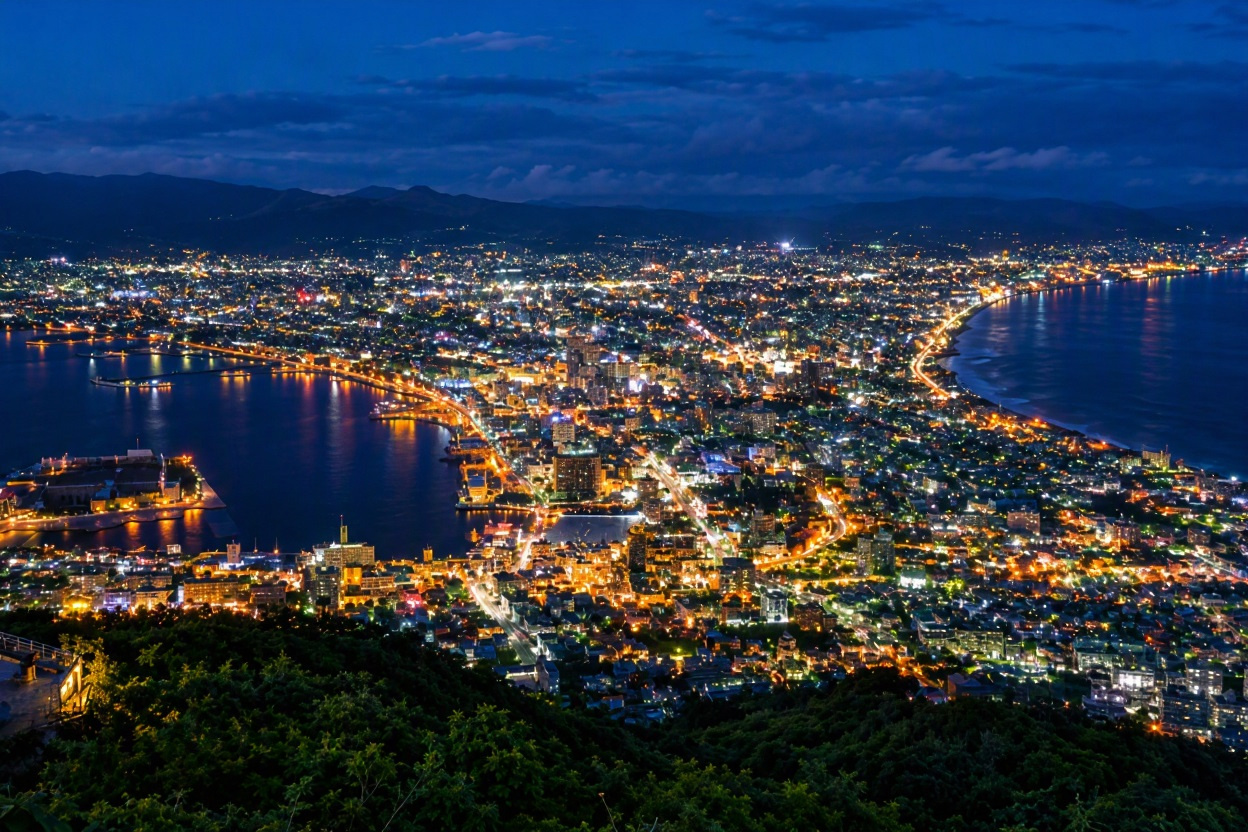
Then comes the view that puts Hakodate on many travelers’ Hokkaido wish lists: Mount Hakodate at night.
From the summit, the city appears as a narrow strip of lights between two dark bodies of water. On a clear evening, it is one of those views that makes everyone stop talking for a moment.
Just remember that mountain access can change with weather, road conditions, seasonal restrictions, and maintenance. Check current information before you go rather than assuming the same transportation will operate every day.
And don’t spend your whole Hakodate trip chasing famous viewpoints.
Some of my favorite moments in the city would be much simpler: a quiet street, a small cafe, the smell of grilled seafood, or the sound of a tram moving through town.
Read more: Hakodate Travel Guide
Where to Stay in Hakodate
Hakodate Station is a practical base if you plan to use trains and buses.
The bay area and Motomachi are great if you want to walk around historic streets and waterfront areas in the evening.
Yunokawa is another choice, especially if a Japanese hot spring stay is part of your travel dream.
Think about your daily route before booking a hotel. Staying near the station can save time when you have early trains. Staying near the bay or Motomachi can make evening walks easier. Staying in Yunokawa gives you a different, slower experience.
Check the Best Hotels in Hakodate
Yunokawa Onsen — Warm Water After a Cold Day
Yunokawa Onsen is one of the easiest hot spring areas to add to a Hakodate trip.
It is close to the city and also convenient for Hakodate Airport, so you don’t need to travel deep into the countryside to enjoy a traditional Japanese hot spring stay.
Imagine this.
You have spent hours walking around Hakodate. Your legs are tired. The evening air is cold. You return to your ryokan, take off your shoes, put on a yukata, and step into a hot bath.
Outside, the air is cold.
Inside, you are warm.
That simple contrast is a big part of the pleasure of a winter or autumn trip to Hokkaido.
Some accommodations also have views toward the Tsugaru Strait, adding the sound and atmosphere of the sea to the experience.
Read more: Yunokawa Onsen Guide
Onuma Park — Lakes, Forests, and Mt. Komagatake
If you want to escape the city without making a huge journey, put Onuma Park near the top of your list.
Onuma Quasi-National Park is easy to reach from Hakodate by train, and the area around Onuma Koen Station is close to the park.
The scenery is simple but beautiful: water, small islands, forest, and the large shape of Mount Komagatake.
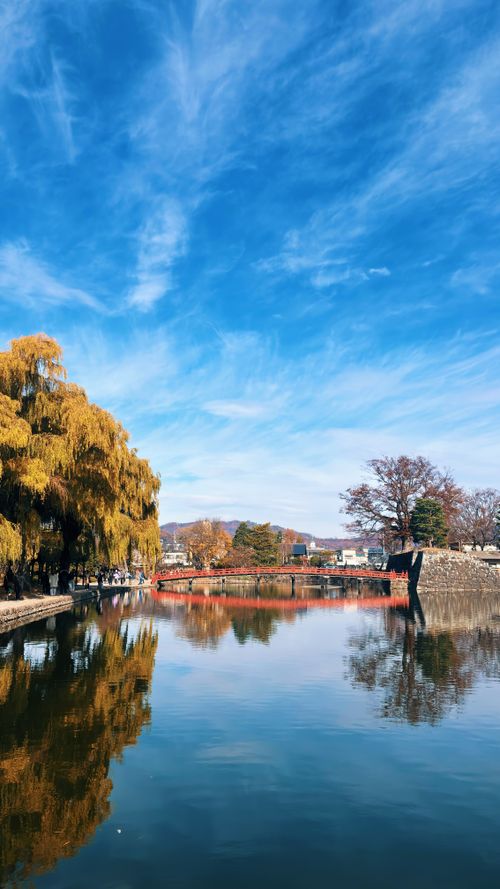
On a calm morning, the mountain can appear on the surface of the lake like a painting.
But you don’t need to do anything complicated.
Walk.
Rent a bicycle.
Take a sightseeing boat when services are operating.
Sit beside the water.
In warmer months, outdoor activities make the area lively. In autumn, the forest becomes a mix of yellow, orange, and red. In winter, snow changes the whole landscape.
Onuma is also a good choice for travelers who are not serious hikers. You can enjoy the scenery without spending the entire day climbing a mountain.
Bring a jacket even when the weather looks comfortable in Hakodate. Open areas around the lakes can feel much cooler, especially in the morning and evening.
Matsumae — Castle Town and Cherry Blossoms
Matsumae takes you into a very different side of Southern Hokkaido.
This is a historic castle town near the southern tip of the island. Matsumae Castle and the surrounding temples, streets, and historic sites tell a story that feels very different from modern Hakodate.
Spring is the big attraction.
Cherry blossoms cover the castle area and surrounding grounds, creating one of the most memorable spring scenes in Southern Hokkaido.
But Matsumae is not only for cherry blossom season.
If you enjoy Japanese history, it is worth visiting at other times of the year too. Walk slowly. Look at the old buildings. Visit the temples. Have lunch and try local seafood.
The Tsugaru Strait has long shaped life in this area, and food is an important part of that story.
Matsumae also makes a good road-trip destination because the journey itself becomes part of the experience. You can stop at coastal viewpoints and small towns along the way instead of treating the drive as dead time.
Esashi — An Old Port Town Worth Slowing Down For
Esashi is the kind of place where I would tell you to put your camera away for a few minutes and simply walk.
The town became prosperous through herring fishing and trade with Kitamaebune merchant ships. Its old streets and buildings still reflect that history.
The Esashi Inishie Kaido area is especially interesting for travelers who enjoy traditional townscapes and local history.
You can also learn about Esashi Oiwake, a traditional folk song with a strong connection to the town.
Esashi feels quieter than Hakodate, and that is part of the point.
Don’t arrive with a list of twenty things to see.
Walk along the old streets.
Find somewhere to eat.
Look toward the harbor.
Listen to the sounds of the town.
One practical issue matters here: transportation takes longer than many first-time visitors expect. A drive and a bus journey can have very different travel times, so check the actual route before building your day.
Hokuto City — More Than a Shinkansen Stop
Many visitors know Hokuto City because Shin-Hakodate-Hokuto Station is where the Hokkaido Shinkansen arrives.
But don’t think of the area as just a place to change trains.
Hokuto has rural landscapes, historic sites, farmland, and seasonal flowers. The Trappist Monastery and its long tree-lined approach are among the area’s better-known sights.
Spring is especially pleasant when cherry blossoms appear, while summer brings green fields and warmer days.
Hokuto can also be a useful place to start a road trip.
You can arrive by Shinkansen, pick up a rental car, and continue into Southern Hokkaido without having to drive from central Hakodate.
That can make a multi-stop itinerary much easier.
Shikabe — Seafood, Hot Springs, and a Geyser
Shikabe sits on the eastern side of the Hakodate area and is a fun stop for travelers who like places where nature and local life meet.
The town is known for seafood, hot springs, and its geyser.
Standing near a geyser is a surprisingly physical experience. You hear the water. You wait. Then it suddenly shoots upward.
It is not something you need to spend an entire day seeing, which makes Shikabe a useful stop on a road trip.
You can combine it with other destinations on the eastern side of the peninsula and make the drive itself part of the day.
If you enjoy seafood, this is also a good area to keep your lunch plans flexible. Local restaurants can have limited hours, so check before you arrive.
Kikonai — A Small Town on the Southern Route
Kikonai is easy to overlook when planning a big Hokkaido itinerary.
I would not rush through it.
It works as both a transportation point and a useful stop during a southern road trip. Have a meal, take a break, look toward the coast, and continue when you are ready.
The area is also connected to the wider Southern Hokkaido rail network, making it useful for travelers who want to combine train travel with a rental car.
Kikonai is a good reminder that a road trip does not have to be a chain of famous attractions.
A small town, a quiet harbor, or a roadside view can become part of the memory.
Mount Esan — Volcano, Sea, and Wild Landscapes
Mount Esan shows a rougher side of Southern Hokkaido.
This volcanic area sits close to the sea, creating dramatic scenery that feels very different from central Hakodate.
The landscape is open and exposed. On clear days, you can look toward the water and feel how close the mountains and ocean are to each other.
Around volcanic areas, you may also notice the smell of sulfur in the air. That is one of those travel details that a photograph cannot capture.
Weather matters here.
Wind can be much stronger than it feels in Hakodate, and mountain conditions can change quickly. Check current information before hiking.
The nearby Mizunashi Kaihin Hot Spring is another unusual place to research. Because the bathing conditions are affected by the tide, timing is important.
Mount Esan is not somewhere I would rush through.
Give it time.
Access & Getting Around
From Tokyo
The Hokkaido Shinkansen connects Tokyo with Shin-Hakodate-Hokuto.
From Shin-Hakodate-Hokuto, the Hakodate Liner provides a convenient connection into Hakodate.
For travelers who prefer flying, Hakodate Airport is another easy starting point. The airport is close enough to Hakodate that you can begin sightseeing without spending half a day on an airport transfer.
Your choice depends on the rest of your Japan itinerary.
If you are already traveling by rail through Japan, the Shinkansen can fit naturally into your trip.
If you are coming from another Hokkaido city or want to save travel time, flying may make more sense.
From Sapporo
From Sapporo, you can reach Southern Hokkaido by train, bus, or car.
Public transportation works especially well if Hakodate is your main destination.
Once you start adding smaller towns such as Matsumae, Esashi, Shikabe, Kikonai, and Mount Esan, the picture changes.
A rental car gives you freedom to leave when you want, stop for photographs, and visit places that are not close to a train station.
You don’t need a car for every Southern Hokkaido trip.
But if your itinerary has several rural destinations, it can save a lot of time.
A Simple Route for First-Time Visitors
For a first trip, I would divide the region into smaller sections.
Base 1: Hakodate
Spend your first days exploring the morning market, Motomachi, Goryokaku, the bay, Mount Hakodate, and Yunokawa.
Trip 2: Onuma and Hokuto
Head north for lakes, forests, Mount Komagatake, countryside scenery, and seasonal flowers.
Trip 3: Matsumae and Esashi
Plan more time for the southern and western coast. If possible, stay overnight rather than trying to squeeze everything into one very long day.
Trip 4: Shikabe and Mount Esan
Explore the eastern side of the Hakodate area by car and leave room for coastal stops.
The key is not to make the itinerary look impressive on paper.
Make it comfortable in real life.

Best Time to Visit & Seasonal Highlights
Spring — Cherry Blossoms and Cool Air
Spring is a wonderful time to visit Southern Hokkaido.
Matsumae is especially famous for cherry blossoms, while Hokuto also has beautiful spring scenery.
The interesting thing about spring in Hokkaido is the temperature.
You may see pink flowers everywhere while still wearing a jacket.
Your hands can feel cold in the morning. Then the sun comes out, and the afternoon becomes comfortable.
That changing weather is normal.
Cherry blossom dates also change from year to year, so check current forecasts before choosing exact travel dates.
Summer — Green Forests and Local Festivals
Summer brings long days and bright green forests.
Onuma is great for walking, cycling, boating, and other outdoor activities. Coastal towns such as Esashi are also enjoyable when you can spend more time outside.
Local festivals add energy to the smaller towns.
Bring sunscreen, but keep a light jacket in your bag.
The sea breeze can feel surprisingly cold after sunset.
Autumn — Red Leaves and Cold Sea Wind
Autumn may be my favorite season for a Southern Hokkaido road trip.
The forests around Onuma change color.
Red, orange, and yellow leaves surround the roads and lakes.
The sun sits lower in the sky, and the air becomes crisp.
Then you reach the coast.
The wind feels cold against your face, and suddenly you remember that winter is not far away.
This is a good season for slow travel.
Drive a little.
Stop often.
Take photographs.
Find a warm drink.
Don’t fill every hour with another attraction.
Winter — Snow, Quiet Streets, and Hot Springs
Winter changes Southern Hokkaido completely.
Snow covers the countryside, the air feels sharp and dry, and Hakodate’s streets can take on a much quieter mood.
This is also when hot springs become especially appealing.
After walking outside in freezing weather, getting into a warm bath feels completely different from taking a normal shower at home.
Yunokawa is an easy choice for this kind of trip, while Onuma offers beautiful snowy scenery.
If you plan to drive in winter, take the conditions seriously. Snow and ice can change driving times and road safety very quickly.
Travel Tips & Local Advice
Real Tip #1: Don’t Judge Travel Time From the Map
This is one of the easiest mistakes to make.
You look at a map and think, “That place isn’t far.”
Then you discover that the road follows the coast, the bus only comes a few times a day, or your connection does not line up.
Southern Hokkaido is not difficult to travel around, but you need to respect the distances.
Don’t put six towns into one day because they look close together on Google Maps.
Pick two or three main destinations and give yourself room to stop.
Real Tip #2: Check the Last Bus Before Leaving Hakodate
This sounds obvious.
It is not.
If you are used to large cities in Japan, you may expect trains and buses to keep running late into the evening.
That is not always the case in smaller towns.
Before leaving your hotel, check:
- Your outbound train or bus
- Your return service
- The final departure
- Whether the timetable changes by season
- How far the bus or train station is from your actual destination
Take screenshots of the timetable on your phone.
If your destination is important to your trip, don’t wait until you arrive to discover that the last bus left an hour ago.
Real Tip #3: Don’t Assume You Can Eat Lunch at Any Time
Small-town restaurants can have short lunch hours.
A restaurant may close between lunch and dinner.
It may have a regular day off.
A popular seafood dish may sell out.
So if you have found one restaurant that you really want to try, check its current opening hours before you build your day around it.
And don’t assume that arriving at 2:30 p.m. means lunch is still available.
Real Tip #4: Pack Clothes You Can Layer
Southern Hokkaido has a lot of coastline and open countryside.
The temperature you feel in central Hakodate may not be the temperature you feel beside the sea or on a mountain.
Bring a light outer layer, especially in spring and autumn.
This is useful for Mount Hakodate at night, Mount Esan, coastal walks, and long road trips.
Real Tip #5: Leave Empty Space in Your Schedule
This is the tip I would give to a friend.
Don’t make every hour productive.
If you see a small roadside shop, stop.
If the sea suddenly looks beautiful, find a safe place to pull over.
If you like a street in Esashi, walk a little farther.
If a lake looks completely different under the evening light, stay for ten more minutes.
Travel is not a competition.
Southern Hokkaido is much more enjoyable when you have enough time to notice what is happening around you.
FAQ
How many days do I need for Southern Hokkaido?
For a first trip focused on Hakodate and nearby areas, 3 to 4 nights is a comfortable starting point. If you also want Matsumae, Esashi, Onuma, Hokuto, Shikabe, and Mount Esan, 5 to 7 days gives you much more breathing room.
Do I need a rental car?
Not necessarily.
Hakodate can be explored with walking, trams, buses, and taxis, while Onuma is easy to reach by train. A rental car becomes much more useful when you want to visit several smaller towns or travel along the coast.
Look at your actual destinations first, then decide.
What is the best season to visit Southern Hokkaido?
It depends on what you want.
Choose spring for cherry blossoms, summer for festivals and outdoor activities, autumn for colorful forests and road trips, and winter for snow and hot springs.
There is no single perfect season for everyone.
Summary
Southern Hokkaido starts with Hakodate, but it certainly does not end there.
You can begin with the famous night view from Mount Hakodate, eat fresh seafood in the morning, and walk through historic streets in the afternoon.
Then you can go north to Onuma and see Mount Komagatake reflected in a lake.
You can travel south to Matsumae and walk through a historic castle town surrounded by cherry blossoms.
You can slow down in Esashi and learn about an old port town shaped by fishing and trade.
You can explore Hokuto instead of treating Shin-Hakodate-Hokuto as only a train station.
You can stop in Shikabe to watch a geyser rise from the ground.
You can take a break in Kikonai.
You can head toward Mount Esan and see a volcanic landscape right beside the sea.
And after a long day outside, you can sit in a hot spring while cold air moves across the water.
Those are the moments I want you to remember.
Not just the famous viewpoint.
Not just the perfect photograph.
Remember the smell of grilled seafood.
The sound of a train passing through a quiet town.
The cold autumn wind on your face.
A mountain reflected in a lake.
Snow falling while you sit in warm water.
That is Southern Hokkaido.
Give it enough time, and I think you will understand why this part of Japan is so easy to fall in love with.
Featured image photo credit: Generated by AI