Overview
If you are coming to Hakodate and you love seafood, set your alarm.
Seriously.
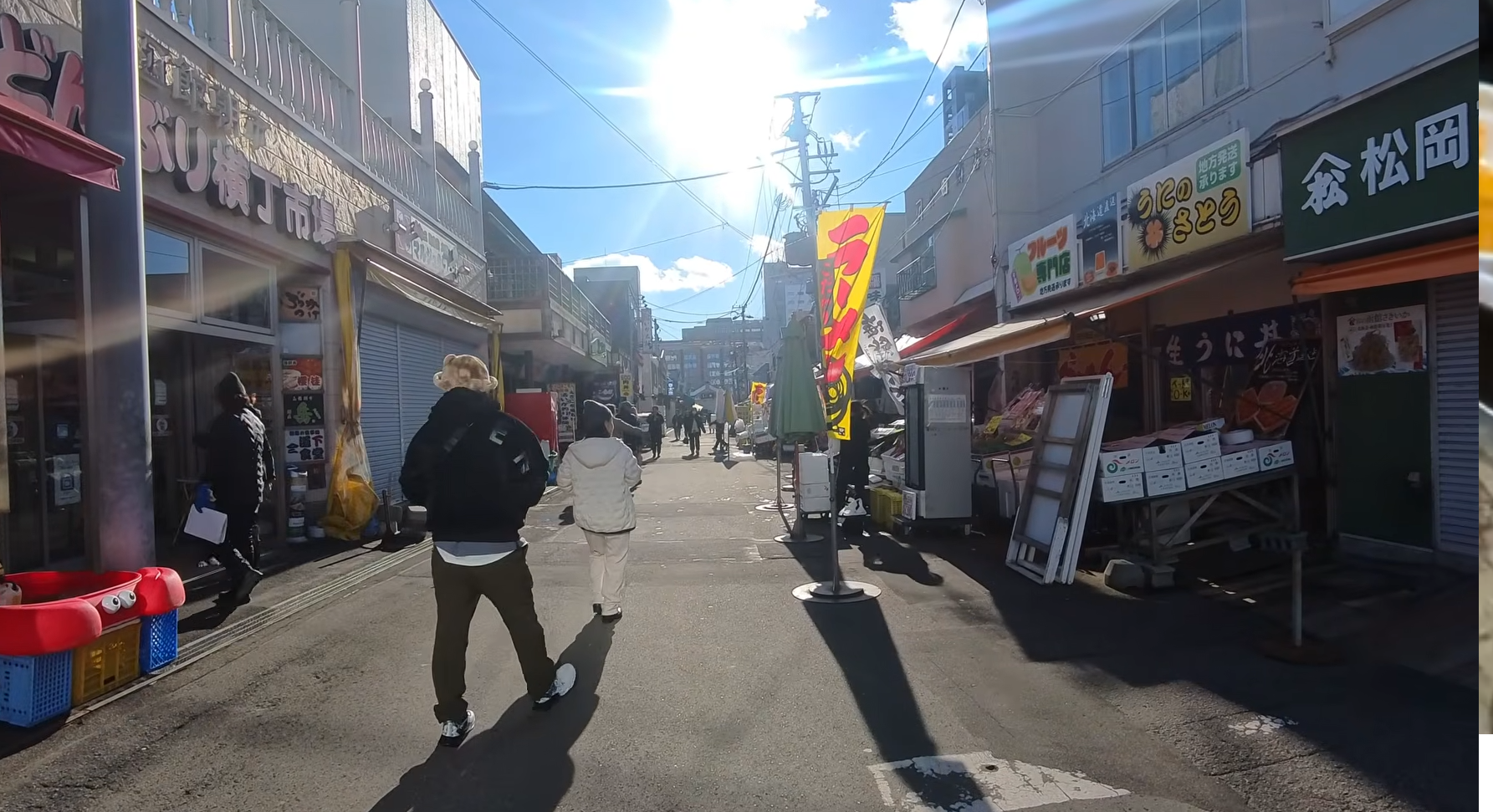
Hakodate Morning Market, or Hakodate Asaichi, is one of those places where getting up early is part of the fun. The market sits right beside Hakodate Station, and around 250 stores and restaurants fill the area with seafood, fruit, vegetables, dried foods, sweets, souvenirs, and local specialties. The official market describes the area as about 3 hectares in size.
I have walked through many markets around Japan with a camera in my hand, but Hakodate Morning Market has a special kind of energy.
You smell grilled seafood before you see it.
You hear vendors calling out from small shops.
You see rows of crabs, scallops, salmon, sea urchin, squid, and other seafood packed over ice.
Then you turn a corner and find a bowl of seafood rice so colorful that you almost forget it is breakfast.
That is Hakodate Morning Market.
The market is especially famous for its fresh seafood breakfast, and its location makes it incredibly easy to add to a Hakodate itinerary. Hakodate Station is only about a one-minute walk from the market, according to the official tourism guide.
The best way to visit is not to rush in, take one photo, eat one bowl, and leave.
Give yourself time to wander.
Look at the seafood counters. Watch the shopkeepers work. Compare different seafood bowls. Pick up a few Hokkaido snacks for later. Stop when something catches your eye.
The market is part breakfast, part shopping trip, and part local experience.
And yes, I strongly recommend coming hungry.
What to Eat: The Ultimate Seafood Experience
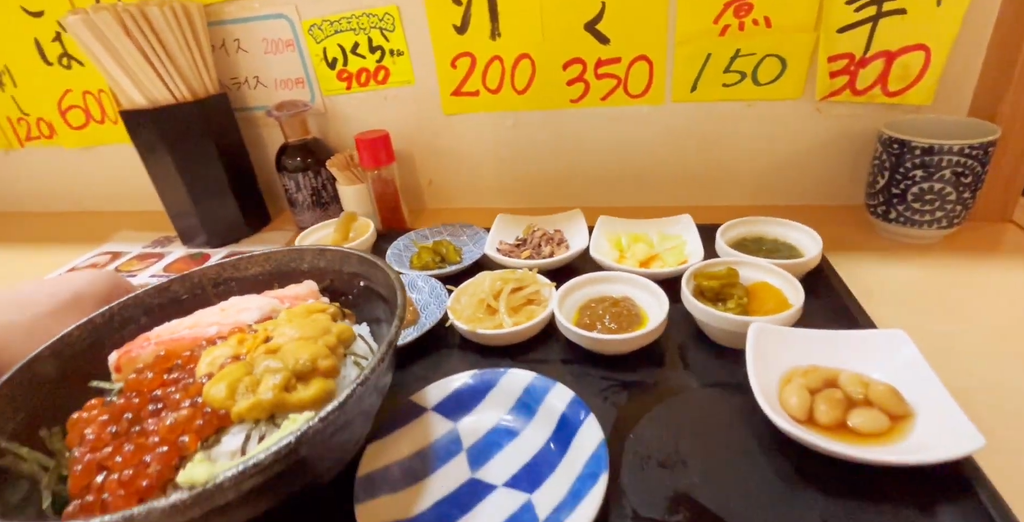
Build Your Dream Kaisen-don
The first thing you should think about when you hear “Hakodate Morning Market” is kaisen-don.
Kaisen-don is a bowl of rice topped with fresh seafood. Depending on the restaurant, you may find uni, crab, scallops, salmon roe, tuna, squid, shrimp, and other seasonal seafood.
Some restaurants let you choose the toppings and build your own combination.
That is dangerous when you are hungry.
You might walk in thinking, “I will just have some scallops.”
Then you see the uni.
Then the crab.
Then the salmon roe.
Suddenly your simple breakfast has become a serious seafood feast.
The official Hakodate Morning Market site says the market is known for fresh seafood and seafood rice bowls, while the city’s tourism guide also recommends the market for breakfast and high-quality seafood ingredients.
My advice is to look at several menus before sitting down.
Prices can vary depending on the seafood, size, and season. If you see a bowl you like, check exactly what is included before ordering.
And do not be afraid of a smaller bowl.
If you want to try several foods during your market visit, a smaller seafood bowl can leave room for grilled scallops, crab, squid, or another snack later.
Uni, Crab, Scallops, and the Taste of Hokkaido
Hakodate is surrounded by rich fishing waters, so seafood is a huge part of the city’s food culture.
At the market, you can find all kinds of seafood and processed seafood products. The official market information specifically lists crab and salmon among its seafood products and describes the market as a place to enjoy very fresh seafood bowls.
If you have never eaten fresh sea urchin before, this is a good place to try it.
Good uni should taste creamy and rich, with a clean taste of the sea.
Fresh scallops have a completely different texture from frozen supermarket scallops. They can be sweet, soft, and surprisingly delicate.
Crab is another popular choice, especially if you want something that feels like a real Hokkaido breakfast.
And then there is squid.
Which brings us to one of the most fun experiences in the entire market.
Try Squid Fishing at Hakodate Morning Market
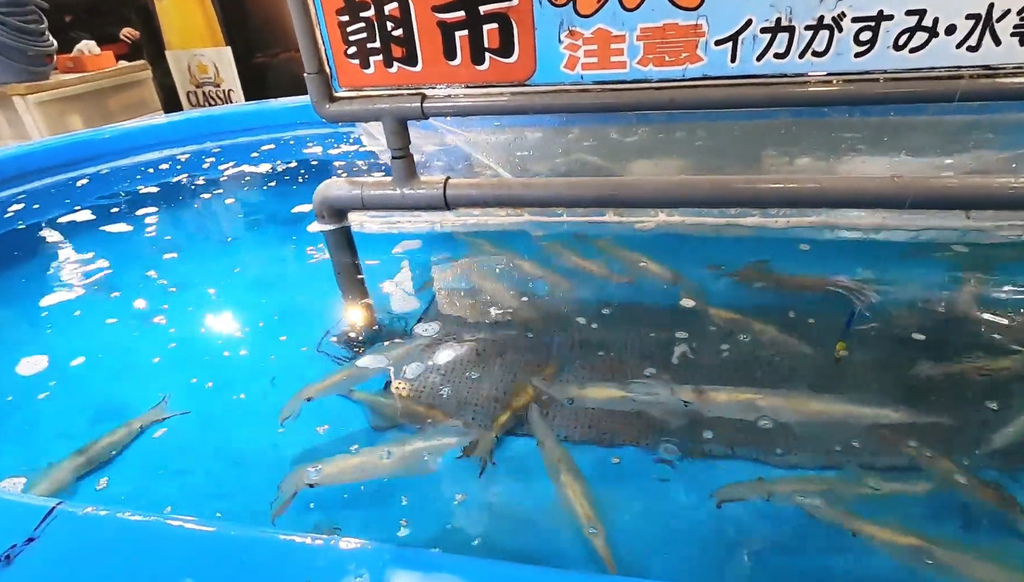
The live squid fishing experience is exactly the kind of attraction I love.
You do not simply order squid from a menu.
You catch it yourself.
At the fishing pond, you use a hook to catch a live squid. Once you catch it, the staff quickly prepare it for you, and you can eat it almost immediately. The official tourism information says the experience is held at Ekini Market inside Hakodate Morning Market.
Watching the chef prepare the squid is part of the fun.
The knife moves quickly.
The squid is cleaned and sliced.
And a few moments later, you are looking at a plate made from something you just pulled out of the water.
The texture is the big surprise.
Fresh squid can be very different from the squid you may have eaten elsewhere. It has a firm, springy bite, and the freshness is easy to notice.
The current tourism information lists the squid fishing experience from around 6:30 AM to 1:30 PM, or until the squid sells out, with hours varying by season. It can also be canceled because of bad weather.
So if squid fishing is high on your list, do not arrive late and assume it will still be available.
This is one attraction where an early start really matters.
Shopping and Exploring the Market Culture
Around 250 Stores to Explore
Hakodate Morning Market is not one single building with one entrance and one line of restaurants.
It is a large market area made up of many stores.
The official market information lists around 250 stores, including about 150 member stores and about 100 non-member stores. The market covers roughly 3 hectares and sells seafood, vegetables, fruit, processed foods, sweets, daily goods, and other products.
That is why I recommend walking around before buying anything.
You may see one store selling dried scallops, another displaying live seafood, another selling Hokkaido sweets, and another preparing seafood bowls.
The sounds are part of the experience.
Shopkeepers call out to passing customers. Small conversations happen across counters. Bags rustle. Knives hit cutting boards. Seafood is packed into boxes for travelers.
It feels busy without needing to be complicated.
Bring Home a Taste of Hokkaido
If you have space in your luggage, the market is also a good place to buy edible souvenirs.
Look for dried seafood, processed seafood, local sweets, salmon products, and other packaged foods that are easy to take home.
If you are buying fresh or frozen seafood, ask the shop about packing and shipping options rather than trying to carry everything yourself.
Some stores offer shipping services, but the details vary by shop.
And if you are not sure what something is, ask.
A simple “What is this?” or “How do I eat this?” can lead to a much better shopping experience than silently guessing.
Start Your Hakodate Day Here
One reason I love the morning market is its location.
You can eat breakfast here and then continue directly into your sightseeing day.
There is no need to spend an hour traveling across town just to reach the market.
After breakfast, you could visit Goryokaku, explore Motomachi and the old slopes, head toward the Bay Area, or take the tram toward Yunokawa.
The official Hakodate tourism site even includes the Morning Market as part of a city sightseeing route, with the market only a short walk from the Hakodate Ekimae tram stop.
If you want to organize your entire day around the market, use our main itinerary as your next step:
⇒ Combine your morning with our Perfect 3-Day Hakodate Itinerary
Local Advice for the Best Market Visit
Real Tip #1: Attack the Market in the 7 AM Hour
This is the advice I would give to a friend who only has one morning in Hakodate.
Go early.
The market opens very early, but the exact opening time depends on the season and individual store. The official market association currently lists typical hours of around 5:00 AM to after 2:00 PM from May through December, and around 6:00 AM to after 2:00 PM from January through April. Individual stores have different hours.
If you arrive around 7:00 AM, you get the best combination of choice and atmosphere.
The market is already alive.
Restaurants are serving breakfast.
Seafood shops are open.
The morning light is beautiful for photography.
And you have a much better chance of getting into popular seafood restaurants before the later breakfast crowd arrives.
I would especially aim for the 7:00–8:00 AM window if squid fishing is one of your priorities.
Do not think, “I will sleep until 9:30 and go later.”
You can certainly visit later, but you will lose some of the early-morning energy, and some popular items or experiences may already be sold out.
Real Tip #2: Carry Some Japanese Yen
Many places accept cards and electronic payments, but do not assume every small market stall will accept your preferred payment method.
The official tourism listing shows major payment options for the market area, including JCB, Visa, Mastercard, UnionPay, Alipay, and WeChat Pay. However, payment methods still vary by individual shop.
My rule for markets is simple:
Carry some cash.
You do not need a huge amount.
Having a few thousand yen in your wallet means you can buy a small snack, a souvenir, or a seafood item without stopping to solve a payment problem.
This is especially useful when you see something delicious at a tiny counter and there is a line behind you.
Real Tip #3: Do Not Book Your Whole Morning Around One Restaurant
If you have found a famous seafood restaurant online, it is tempting to build the entire morning around it.
I would not.
The market has hundreds of stores and restaurants, and opening hours vary by business.
If your chosen restaurant has a long line, walk around.
Look at the other menus.
Compare seafood bowls.
Check the stalls.
You may discover something you like just as much.
If a specific restaurant is essential to your trip, check its own reservation rules and current opening hours before you go. Market-wide opening hours do not guarantee that every individual restaurant follows the same schedule.
Real Tip #4: Bring a Small Bag for Souvenirs
This sounds minor, but it makes the morning much easier.
You may start with a seafood breakfast and end up buying dried scallops, sweets, seafood snacks, or other Hokkaido products.
A small foldable shopping bag takes almost no space in your luggage.
Also remember that fresh seafood can require special packing or shipping arrangements. Ask before purchasing if you are flying out of Japan the same day.
Real Tip #5: Take Photos, But Do Not Block the Counters
The market is a working shopping area, not just a photo set.
There are people buying breakfast, shopkeepers preparing seafood, and staff carrying products.
If you want a close-up photo, step to the side and make sure you are not blocking a customer or employee.
And always ask before photographing people directly.
The best market photos are often the quick ones: steam rising from a bowl, a crab moving in a tank, fresh seafood on ice, or morning light coming through the market entrance.
You do not need to turn every moment into a staged photo.
FAQ
What time does Hakodate Morning Market open?
The market does not have one single opening time for every store.
The official market association currently lists general hours of around 6:00 AM to after 2:00 PM from January through April, and 5:00 AM to after 2:00 PM from May through December. Individual businesses have different hours and some close earlier.
The city’s tourism guide also recommends visiting early for breakfast and fresh ingredients.
If you want the best chance of enjoying seafood breakfast and squid fishing without a long wait, I would arrive around 7:00 AM.
Do I need a reservation for a famous seafood restaurant?
Not necessarily.
There are many restaurants in the market, and policies vary by restaurant. Some may accept reservations while others operate mainly on a first-come, first-served basis.
If there is one particular restaurant you absolutely want to try, check its current reservation policy before your trip.
If you are flexible, simply arriving early gives you more options.
Also remember that the squid fishing experience is not the same as reserving a restaurant table. Its availability depends on the season, supply, weather, and whether the squid has sold out. The current official tourism information lists its hours as approximately 6:30 AM to 1:30 PM or until sold out.
Is Hakodate Morning Market really close to Hakodate Station?
Yes.
It is one of the easiest major sightseeing spots to reach after arriving in Hakodate.
The official tourism guide lists the market as about one minute on foot from Hakodate Station, while the Hakodate tram’s Hakodate Ekimae stop is also only a short walk away.
That makes it a perfect first stop if you arrive in Hakodate by train.
Drop your luggage at your hotel or luggage storage, walk to the market, eat a seafood breakfast, and start sightseeing from there.
You can literally begin your Hakodate trip with a bowl of fresh seafood.
Summary
Hakodate Morning Market is one of those places where the early alarm is worth it.
You wake up while the city is still quiet, walk toward Hakodate Station, and suddenly the smell of seafood and the voices of market sellers pull you inside.
Then the fun begins.
You can build a giant kaisen-don with uni, crab, scallops, and other seafood. You can watch skilled cooks prepare fresh squid. You can browse around roughly 250 stores, search for Hokkaido souvenirs, and taste things you may never see at home.
My biggest advice is simple: go early, carry some cash, and do not rush.
Aim for the 7 AM hour if you want the liveliest breakfast experience with plenty of choices. Give yourself time to walk around before deciding where to eat. If you want squid fishing, make it an early priority because availability can depend on the season and supply.
And once breakfast is finished, your Hakodate adventure has only just started.
The market is right beside the station, so you can easily continue to Goryokaku, Motomachi, the Bay Area, Mount Hakodate, or Yunokawa.
For me, that is what makes Hakodate Morning Market so good.
It is not just a place to eat breakfast.
It is the place where a Hakodate day begins.
Featured image photo credit: Free Stock Photo
Leave a Reply