Overview
There are plenty of hot spring towns in Japan, but Yunokawa Onsen has one thing I really love: you do not have to travel deep into the mountains to get that classic Japanese onsen feeling.
Yunokawa is part of Hakodate itself. From Hakodate Airport, the hot spring area is only about a five-minute drive, while the city tram takes about 30 minutes from Hakodate Station. That makes it incredibly easy to combine with a first-time Hakodate trip.
Then you step out of the hotel in your yukata, feel the cool sea air on your face, and realize that the Tsugaru Strait is right there.
Yunokawa has been known as a hot spring area since 1653, and it is counted among Hokkaido’s major hot spring resorts. Its history goes back to the Edo period, long before Hakodate became the international port city travelers know today.
What makes the experience special for me is the contrast. You can spend the afternoon riding the tram through Hakodate, looking at old Western-style buildings and harbor scenery, then spend the evening sitting quietly in an outdoor bath with steam rising around you and the cold sea breeze brushing your face.

The Charm of Yunokawa Onsen
A Hot Spring Town Right Beside the Sea
Yunokawa sits close to the coast, and many hotels and ryokan in the area make the most of that location.
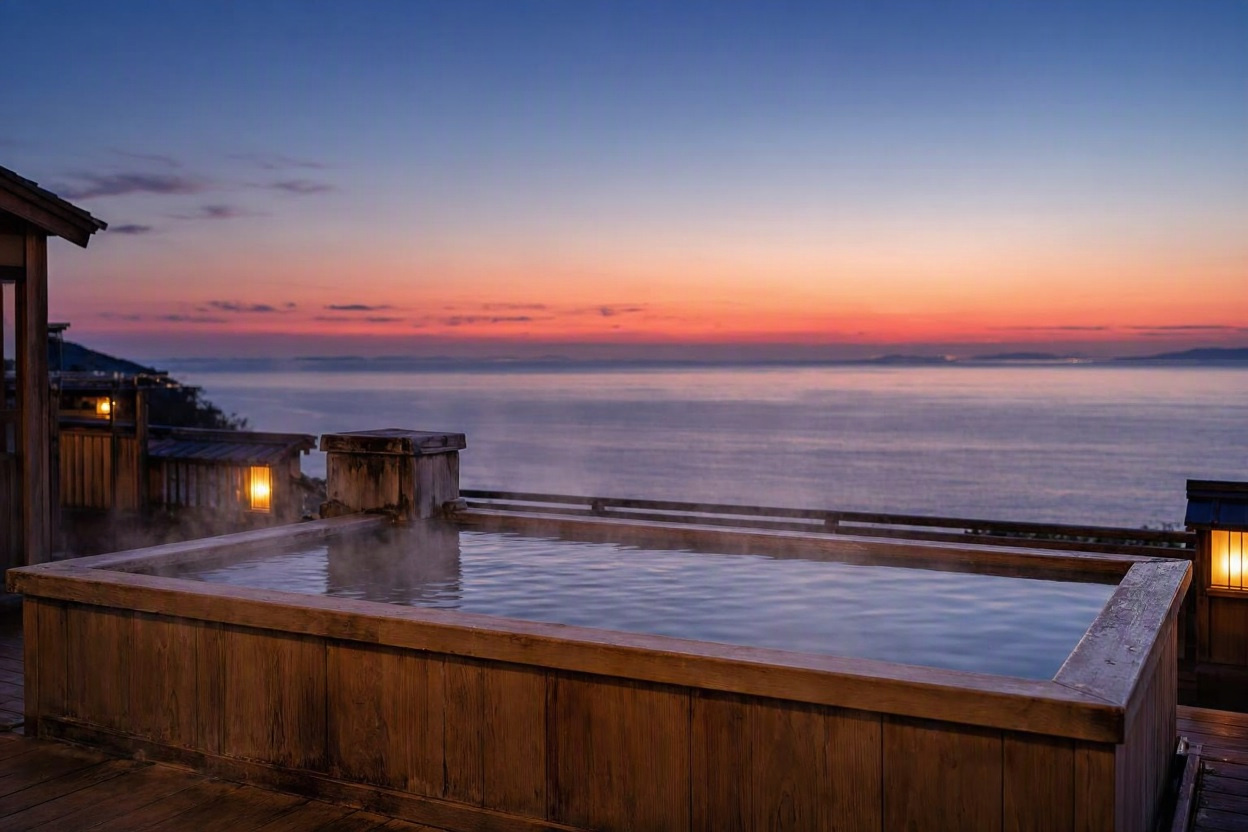
Some outdoor baths face toward the sea, giving you a view that feels very different from the forest or mountain scenery found at many inland onsen towns. On clear evenings, you may even see fishing boats and their lights out on the water.
This is one of those moments when I stop taking photos for a minute.
The bath is hot. The air is cold. You can hear the water moving, and beyond the steam there is a dark stretch of sea. That simple contrast is one of my favorite parts of traveling in northern Japan.
What Does Yunokawa’s Hot Spring Water Feel Like?
Yunokawa is known for its chloride-type hot spring water. The mineral-rich water has a slightly salty character, and chloride hot springs are often described as water that helps retain warmth after bathing.
For a traveler who has never used an onsen before, the feeling can be surprisingly different from taking a normal bath at home. The water is hot, the air around the outdoor bath can be chilly, and your skin may feel warm for quite a while after you get dressed.
My advice is simple: do not try to stay in the bath for an hour on your first attempt.
Get in slowly, enjoy the warmth, get out if you feel too hot, drink some water, and come back later.
That is much more enjoyable than trying to prove you can tolerate very hot water.
The Famous Monkeys That Take Hot Baths
Yunokawa also has one of the strangest and cutest attractions in Hakodate: Japanese macaques taking their own hot spring baths.
At Hakodate Tropical Botanical Garden, the monkeys can be seen soaking in Saruyama Onsen during the colder months, roughly from December into early May. Watching them sit quietly in the steaming water while snow falls around them is almost comically human.
The bathing period can change because the garden may stop filling the pool when baby monkeys are born for safety reasons. So if seeing the monkeys in the water is high on your list, check the latest schedule before visiting.
The botanical garden is also an easy addition to an onsen day. From Hakodate Station, it takes about 20 minutes by bus, while the tram route takes you to the Yunokawa Onsen area before a walk to the garden.
Try the Foot Bath First
Not ready to strip down and enter a Japanese bath?
That is completely fine.
Near the Yunokawa Onsen tram stop, there is a public foot bath called Yumeguri Butai. It is free to use and is an easy way to experience hot spring water without committing to a full bath. The foot bath is about a one-minute walk from the tram stop.
Bring a small towel. Your feet will be wet when you leave, and this is one of those tiny practical details that is easy to forget.
How to Enjoy a Traditional Ryokan Stay
A ryokan stay is not simply “a hotel with an onsen.”
The whole rhythm is different.
You arrive, remove your shoes at the entrance, and step into a quieter world. Depending on the ryokan, someone may guide you to your room, where you change into a yukata. The room often has traditional Japanese details such as tatami flooring, low tables, and futon bedding prepared later in the evening.
Then comes the bath.
This is the part I never want to rush.
Put on your yukata, walk through the hotel, enter the changing room, wash your body first, and then finally step into the hot spring. If you choose an outdoor bath, you may find yourself surrounded by steam while cold air touches your shoulders.
After the bath, come back to your room feeling warm and sleepy.
Then dinner arrives.
At a good ryokan, dinner can be a long meal rather than something you finish in 20 minutes. Small seasonal dishes may arrive one after another: sashimi, grilled fish, soup, vegetables, rice, and other Hokkaido ingredients. At some traditional properties, dinner is served in your room or a private dining space.
In Yunokawa, the combination of seafood, hot spring water, yukata, and the sound of the sea outside makes the experience feel deeply connected to Hakodate.
If you want to compare some of the best hotels and ryokan in the city before choosing your stay, start here:
Discover the 10 Best Hotels and Ryokans in Hakodate
One important thing: a ryokan may feel very different from a Western hotel. Meals can take longer, futons may replace a Western bed, and the quiet atmosphere is part of the experience. I would not book a traditional ryokan if you want a hotel where you can come and go quickly without thinking about the schedule.
Book it because you want to slow down.
Essential Onsen Etiquette for Foreign Travelers
Japanese onsen culture is wonderfully simple once you understand the basic rules. The confusing part is that the rules are often not explained in much detail when you arrive.
Here are the things I would know before my first visit.
Real Tip #1: Wash Before You Enter the Bath
This is the big one.
You do not wash your body inside the bathtub.
The shower area is where you clean yourself. Wash your hair and body, rinse away all the soap, and only then enter the hot spring.
The shared bath is for soaking, not washing.
It may feel strange at first because many Western travelers are used to taking a bath and washing while sitting in the tub. In a Japanese onsen, the order is different:
Wash → rinse → enter the bath → relax.
Once you understand this, it becomes very easy.
Real Tip #2: Keep Your Towel Out of the Water
Most onsen provide or sell a small towel and a larger towel.
The small towel is useful for washing and drying your face or body. When you enter the bath, keep that small towel out of the water.
You will often see Japanese guests place it on their head while sitting in the bath. You can do the same.
And please do not dunk it into the hot spring.
It sounds like a tiny rule, but it is one of the easiest ways for a first-time visitor to accidentally look like they do not know the local customs.
Real Tip #3: Check the Tattoo Policy Before You Get Undressed
Tattoo rules are not the same at every onsen.
Some facilities allow guests with tattoos if the tattoo can be completely covered. Others may restrict tattooed guests from public bathing areas or suggest a private bath instead.
Do not wait until you are standing in the changing room to find out.
Check the hotel’s current policy before your trip. If the English information is unclear, send the hotel a short message with the size and location of your tattoo and ask whether you can use the public bath.
This five-minute check can save you an uncomfortable situation.
Real Tip #4: Drink Water and Take Your Time
Hot springs can be physically intense, especially if you are not used to hot water.
Do not jump into the hottest bath after walking around Hakodate all afternoon and then stay there until you feel dizzy.
Drink water before and after bathing. Start with a short soak, step out, cool down, and enter again if you feel comfortable.
And remember that the cold outdoor air can make you want to stay in the bath longer than you should.
The goal is to feel relaxed when you leave, not exhausted.
Real Tip #5: Bring a Small Bag for Your Wet Towel
This is especially useful if you are doing a day-trip bath rather than staying overnight.
Your small towel will be wet when you leave. Some facilities may have towels available for purchase or rental, but the system differs by property.
A small waterproof pouch in your day bag makes life much easier.
Day-Trip Onsen: You Do Not Have to Stay Overnight
One of the best things about Yunokawa is that you can experience the hot springs even if you are staying somewhere else in Hakodate.
Some hotels and inns offer bathing facilities to non-overnight guests, although opening times, prices, reservation requirements, and availability vary by property.
That means you could stay near Hakodate Station, spend the morning at the Morning Market, explore Goryokaku or Motomachi, and then head to Yunokawa for an afternoon bath.
I would still recommend staying one night if you have the time.
There is something very different about finishing dinner, walking back to your room in a yukata, and knowing you can return to the bath later.
A day trip gives you the hot spring.
An overnight ryokan stay gives you the whole rhythm of the experience.
Getting to Yunokawa Onsen
From Hakodate Station
The simplest option for most visitors is the Hakodate City Tram.
The tram takes about 30 minutes from Hakodate Station to the Yunokawa Onsen stop. From there, many hotels, foot baths, restaurants, and other attractions are within walking distance.
This is one reason I like Yunokawa for foreign visitors. You do not need to rent a car just to enjoy a luxury onsen stay.
From Hakodate Airport
The airport is extremely close to Yunokawa.
The official Hakodate tourism guide lists the hot spring area as about a five-minute drive from Hakodate Airport.
That makes Yunokawa a very smart first or last night in Hakodate if your flight schedule allows it.
You can land, collect your suitcase, and be soaking in hot spring water surprisingly soon afterward.
What Else to See Around Yunokawa
Yunokawa is more than a group of hotels.
Yukura Shrine
Yukura Shrine is just a short walk from the Yunokawa tram area and has a long connection with the history of the hot spring district. The official Hakodate guide traces Yunokawa’s history back to 1653 and links the area with stories of the hot spring’s healing origins.
It is a nice place to visit before or after your bath because it gives you a little historical context for the neighborhood.
Yunokawa Onsen Foot Bath
The free foot bath near the tram stop is perfect for a short break.
In winter, there is something wonderfully simple about sitting outside with cold air around you while your feet sit in warm mineral water. The official tourism guide lists the foot bath as free and says it is open from 9:00 AM to 9:00 PM, although travelers should check for maintenance closures.
The Sea and Fishing Lights
If your hotel has an ocean-facing outdoor bath, keep your eyes open after sunset.
During the warmer months, fishing boats can appear offshore, their lights shining against the darker water. From a steaming bath, it can feel almost unreal.
This is one of those travel moments that does not need a checklist.
You just sit there.
FAQ
Can I visit Yunokawa Onsen as a day trip?
Yes. Some hotels and ryokan offer bathing to non-overnight guests, although availability, hours, fees, and reservation requirements vary. Check the facility directly before going.
Can I use a Yunokawa onsen if I have tattoos?
It depends on the facility. Tattoo policies vary, so do not assume that one hotel’s rule applies to another. Check the current policy before your visit and ask about tattoo covers or private baths if needed.
How do I get from Hakodate Station to Yunokawa Onsen?
Take the Hakodate City Tram toward Yunokawa. The trip takes about 30 minutes to the Yunokawa Onsen tram stop. From there, you can walk to the surrounding hotels and attractions.
Summary
Yunokawa Onsen is the kind of place that makes you slow down without asking you to.
It is close to Hakodate Airport, easy to reach by tram, rich in history, and right beside the sea. You can watch monkeys soaking in hot water in winter, warm your feet at a free foot bath, or spend an entire evening in a traditional ryokan wearing a yukata and listening to the waves.
But my favorite part is still the simplest.
You step into the outdoor bath. Steam rises around your shoulders. The night air is cold. Somewhere beyond the bath, the sea is dark and quiet.
For a few minutes, there is nowhere else you need to be.
Featured image photo credit: Generated by AI