Overview
If you have never seen Hakodate in winter, imagine this: fresh snow covering the old streets, warm yellow lights glowing from historic buildings, steam rising from a hot bowl of ramen, and the sea sitting quietly beyond the city.
That is winter in Hakodate.
Hakodate is in southern Hokkaido, so its winter can feel a little gentler than some of the colder parts of Hokkaido, but the city still gets proper snow and freezing temperatures. December through February brings snowy streets, winter illuminations, seasonal seafood, hot springs, and some of the most beautiful evening scenery of the year.
What I love most is how easy it is to combine different winter experiences in one trip. You can spend the afternoon walking around historic Motomachi, watch the lights come on as the sky turns blue, warm yourself with soup or ramen, and finish the evening soaking in a hot spring.
Then there is the snow.
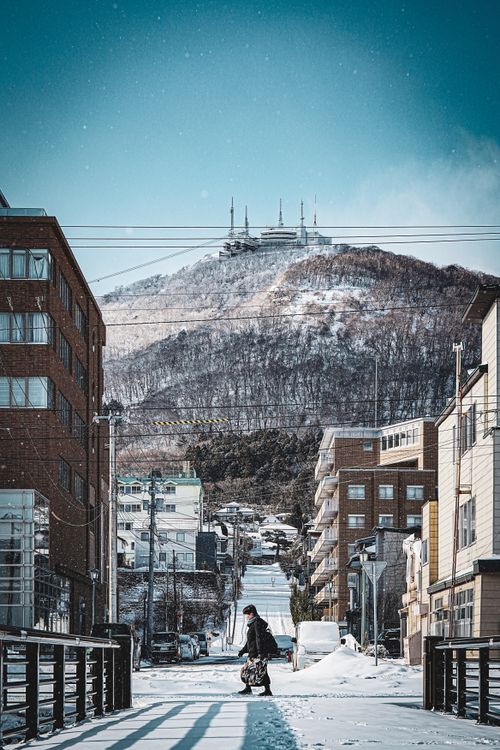
When snow starts falling around Hakodate’s old churches, red-brick warehouses, and steep streets, the city can feel almost like a movie set. The lights reflect off the snow, footsteps become softer, and even familiar sightseeing spots look completely different.
If you are planning a winter trip to Hokkaido, Hakodate deserves more than a quick stop.

Winter Highlights and Romantic Illuminations
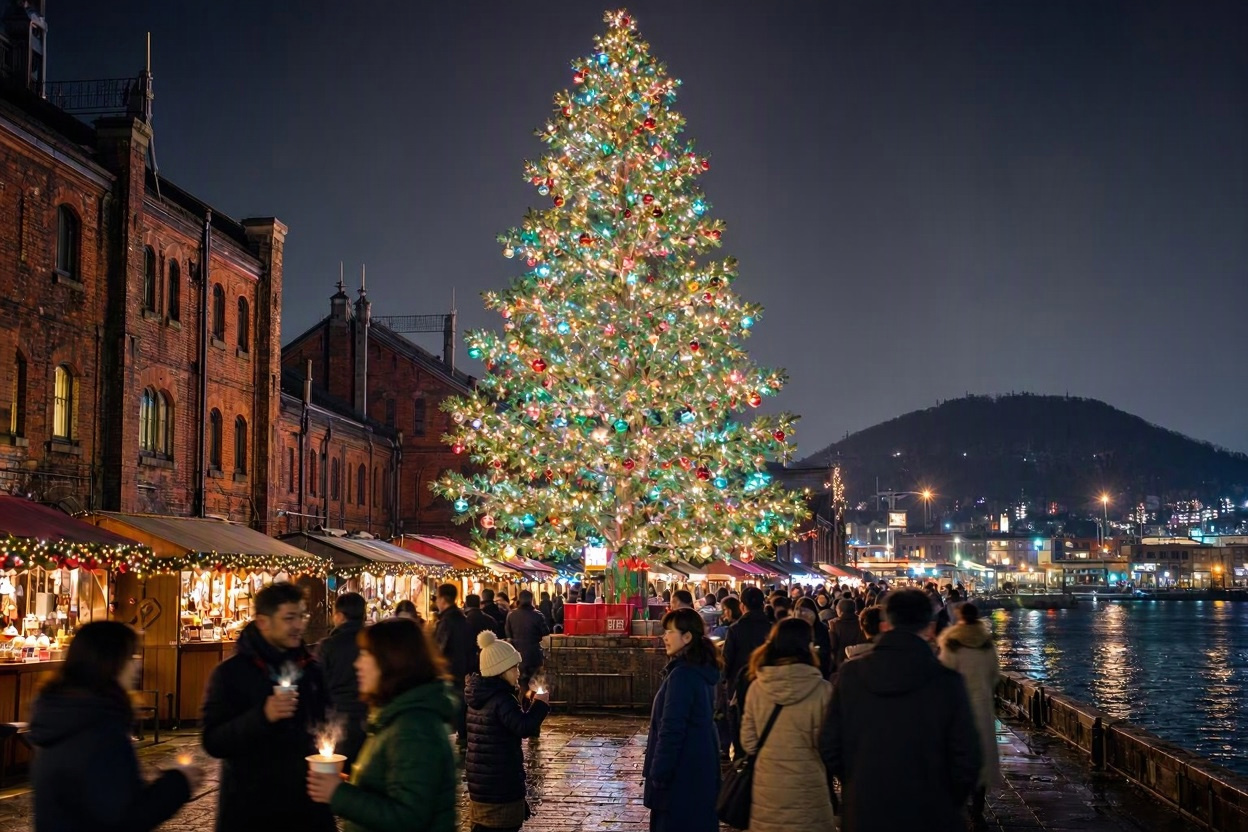
Hakodate Christmas Fantasy: The Giant Christmas Tree by the Bay
If you visit Hakodate in December, put Hakodate Christmas Fantasy at the top of your evening plans.
The event takes place in the Bay Area, where a huge Christmas tree is placed on a barge in the water in front of the Kanemori Red Brick Warehouses. More than 50,000 lights illuminate the tree, while the surrounding waterfront buildings glow against the winter darkness.
The traditional event period is December 1 through December 25, although the exact annual schedule can change, so check the official event information before your trip. The official 2025 schedule, for example, ran from November 29 through December 25.
The most exciting part is the evening lighting and fireworks.
On the established schedule, fireworks are launched at 6:00 PM, making this a great time to arrive early, find a good viewing position, and watch the waterfront change from blue hour to full darkness. Special red-tree lighting has also been part of recent editions.
I recommend arriving before the main lighting. Walk around the red-brick warehouses first, grab something warm to drink or eat, and then head toward the waterfront.
There is something incredibly satisfying about holding a hot cup of soup while looking at a giant Christmas tree floating in the dark bay with snow falling around you.
The event area also has soup bars, which makes perfect sense in Hakodate’s winter weather. A hot bowl of soup after standing outside in the cold can honestly feel like part of the attraction itself.
Hoshi no Yume: Goryokaku Becomes a Giant Star
Goryokaku is already one of Hakodate’s most recognizable sights because of its unusual five-pointed star shape.
Winter adds another layer.
During the Hoshi no Yume Illumination, lights are placed around the moat surrounding the fortress, outlining the star shape after sunset. The official tourism guide says around 2,000 light bulbs are used for the illumination, which traditionally runs from December 1 through late February.
The best way to understand the shape is from above.
From Goryokaku Tower, the illuminated fortress appears as a huge glowing star surrounded by snowy streets. On the ground, you can also walk along the moat and experience the lights from a much closer perspective.
The atmosphere changes depending on the weather.
If there is fresh snow, the white landscape makes the lights stand out beautifully. If the moat is not completely covered with snow, reflections can appear on the water. The official tourism guide also notes that the view can shift from a bluish color just after sunset to a darker, more dramatic scene later in the evening.
One practical point: the illumination and Goryokaku Tower operating hours are not exactly the same. The illumination can continue after the tower closes, so check the current tower schedule if you want to see the star from above.
Hachimanzaka and the Winter Streets of Motomachi
You do not need a special event to enjoy Hakodate’s winter lights.
Some of my favorite winter moments come from simply walking through Motomachi after sunset.
Hachimanzaka is especially beautiful. The steep road leads toward the sea, and during winter the surrounding buildings, trees, and pavement can be covered with snow while the waterfront lights appear in the distance.
Nijukkenzaka and other streets around the historic district are also part of Hakodate’s winter illumination program. The city’s official guide says these areas, along with parts of the Bay Area, are generally illuminated from around 5:00 PM to 10:00 PM during the winter illumination season.
This is where Hakodate feels different from a typical winter resort.
You are not just looking at snow.
You are walking through a historic port city with churches, old Western-style buildings, stone streets, slopes, harbor views, and warm lights appearing through the snow.
Cozy Winter Comforts: Hot Springs and Food
A Snowy Outdoor Bath at Yunokawa Onsen
After spending a few hours outside in winter, there is one word that starts sounding very attractive:
Onsen.
Yunokawa Onsen is one of Hakodate’s best places to experience that feeling.
The area is easy to reach from central Hakodate by tram, and it is also close to Hakodate Airport. There are many hotels and traditional Japanese inns with their own hot spring baths.
If you can book a room with an outdoor bath or stay at a ryokan with an open-air public bath, winter is the season to enjoy it.
Imagine stepping outside into freezing air while your body is surrounded by warm mineral-rich water. Snow is falling quietly around you. Your hair gets cold, but your shoulders stay warm. The air is completely different from the bath water, and the contrast makes the experience unforgettable.
That is the magic of a winter yukimiburo, or snow-viewing bath.
You do not even have to book an expensive ryokan to get a small taste of the Yunokawa experience. There is a free public footbath near the Yunokawa Onsen tram stop, open from 9:00 AM to 9:00 PM on regular days.
And there is another famous winter sight nearby.
At Hakodate Tropical Botanical Garden, Japanese macaques can be seen soaking in a hot spring during the colder months. The bathing-monkey season generally runs from December into spring, although dates and viewing conditions can change.
What to Eat When Hakodate Is Freezing
Winter is also a great excuse to eat your way through Hakodate.
Seafood is a major part of the city’s food culture, and the official tourism guide specifically recommends winter seafood such as tuna, oysters, Atka mackerel, and sea urchin.
If you love crab, keep an eye out for local seafood restaurants and markets serving crab dishes, including king crab when available. Fresh scallops are another excellent choice.
And then there is ramen.
Hakodate is famous for shio ramen, or salt-flavored ramen. Unlike some heavier ramen styles, Hakodate’s traditional version often has a clear, lighter broth. After walking outside in freezing weather, a steaming bowl of shio ramen can be exactly what you need.
I also recommend trying Hokkaido-style soup curry.
It is not exclusive to Hakodate, but it is a fantastic winter meal: spicy broth, vegetables, meat or seafood, and enough heat to warm you from the inside.
If you are staying around Hakodate Station, the morning market is another easy place to explore. Hakodate Asaichi has more than 300 stores selling seafood and other local products, and seafood rice bowls are one of the area’s classic meals.
For a winter trip, I would not try to eat everything in one day.
Give yourself time for a seafood breakfast, ramen for lunch, soup curry on another day, and a relaxed seafood dinner after an onsen.
That is a much better way to experience Hakodate.
Make Your Hotel Part of the Winter Experience
In summer, your hotel can simply be a place to sleep.
In winter, I think the hotel becomes part of the trip.
After walking through snow for several hours, being able to return to a warm room, dry your gloves, take a hot bath, and relax without rushing makes a huge difference.
If you are planning a winter visit, take a look at our hotel guide:
⇒ Check the 10 Best Hotels in Hakodate for a Cozy Winter Stay
For a romantic trip, I would look for a hotel with an onsen or a good city view. For families, a spacious room and easy access to transportation can be more important. If you plan to spend several evenings outside, staying somewhere close to the tram network can save you a lot of walking in bad weather.
Essential Tips for Surviving a Hakodate Winter
Winter Hakodate is beautiful, but you need to prepare for it.
The official tourism guide lists average temperatures of around -0.1°C in December, -2.4°C in January, and -1.8°C in February. Average minimum temperatures are colder, reaching about -6°C in January. Nighttime temperatures stay below freezing during the winter months.
Here are the practical things I would tell a friend before they leave.
Real Tip #1: Buy Ice Spikes for Your Shoes
This is one of the most important tips for first-time winter visitors.
Hakodate has several beautiful slopes, especially around Motomachi. Those slopes can become extremely slippery when snow gets compressed into ice.
Normal sneakers are a bad idea.
Buy removable ice spikes or anti-slip shoe grips from a convenience store, outdoor shop, or other local retailer after you arrive if you need them. Put them on before walking around the slopes.
They are small, easy to carry, and can make a huge difference.
Do not assume that because you can walk normally on snow, you can walk normally on an icy slope.
Fresh snow is one thing.
Hard, polished ice under a thin layer of snow is completely different.
Real Tip #2: Protect Your Phone Battery
Cold weather can make smartphone batteries drop much faster than you expect.
This matters because your phone is probably doing everything during your trip: maps, translation, train and tram information, restaurant searches, photos, tickets, and emergency communication.
Keep your phone inside an inner pocket rather than an outside coat pocket.
Bring a portable power bank and keep that warm too. If your phone suddenly shows a very low battery after spending an hour outside, do not panic. Put it somewhere warm and give it some time before assuming the battery is completely dead.
This is especially important if you plan to photograph the Christmas Fantasy, Goryokaku illumination, or the Mount Hakodate night view.
Real Tip #3: Wear Waterproof Boots, Not Just Warm Shoes
Warmth is only half the problem.
Snow melts. Slush appears. Water collects around roads and sidewalks. Your feet can get cold very quickly if your shoes become wet.
The official Hakodate winter guide recommends thick coats and waterproof boots for winter travel.
I would also wear wool or thermal socks and carry an extra pair if you are going to spend a long time outdoors.
There is nothing romantic about walking through a beautiful winter city with freezing wet socks.
Real Tip #4: Dress in Layers
Do not simply buy the biggest, thickest coat you can find.
Layers are much more useful.
Wear a thermal base layer, a warm middle layer, and a wind-resistant outer coat. Add gloves, a hat, and a scarf.
This lets you adjust your clothing when you move between the freezing streets and heated restaurants, shops, trains, and hotels.
And remember that the top of Mount Hakodate can feel much colder than the city streets. If you are planning a winter night view, bring extra warmth even if the weather feels comfortable downtown.
Real Tip #5: Give Yourself Extra Travel Time
Snow changes the pace of a trip.
You may need longer to walk because of slippery sidewalks. Trams and buses can be affected by winter road conditions, and a short walk can take much longer when you are carefully stepping over icy sections.
The Hakodate tram is still one of the most useful ways to move around the city in winter, but you should always check the latest transportation information on the day you travel.
My rule is simple:
Never build a winter itinerary where one delayed tram ruins your entire evening.
Leave some breathing room between sightseeing stops.
That way, if you spend an extra 20 minutes taking photos in the snow or warming up with ramen, your day still works.
FAQ
What are winter temperatures like in Hakodate, and what should I wear?
December averages around -0.1°C, January around -2.4°C, and February around -1.8°C. Average low temperatures can reach about -6°C in January, and nighttime temperatures are generally below freezing.
Wear layers, a warm winter coat, gloves, a hat, and a scarf. Waterproof winter boots are strongly recommended, especially if you plan to walk around Motomachi or other snowy areas.
For long evening sightseeing, especially Mount Hakodate, dress warmer than you think you need.
Does public transportation work when it snows?
Yes, Hakodate’s tram remains an important way to move around the city during winter, and many major sightseeing areas are accessible by tram.
However, heavy snow and icy conditions can affect travel times, and walking itself can become slower.
Check the latest service information on the day of your trip and avoid planning extremely tight connections.
The tram is especially useful for connecting central Hakodate with areas such as Motomachi and Yunokawa. Yunokawa Onsen is roughly 30 minutes from Hakodate Station by tram.
Is Hakodate worth visiting in winter if I do not like extreme cold?
Yes, as long as you plan around the weather.
You do not have to spend the entire day outside. One of the best things about winter Hakodate is the balance between outdoor scenery and warm indoor experiences.
You can walk through the snowy streets for an hour, stop for coffee, visit a museum or shop, eat ramen, return to your hotel, and then go out again for the evening illuminations.
Winter is also a great time to enjoy Yunokawa Onsen and seasonal seafood.
If you are sensitive to cold, December can feel easier than the heart of January or February, while January and February offer a stronger chance of seeing the city covered in snow. Exact snowfall and conditions vary from year to year.
Summary
Winter Hakodate is not just a colder version of the city.
It is a completely different Hakodate.
The snow changes the old streets of Motomachi. Hachimanzaka glows beneath winter lights. Goryokaku becomes a giant star after dark. The Bay Area comes alive with the enormous Christmas tree of Hakodate Christmas Fantasy. Snow-covered streets lead you toward warm restaurants, steaming ramen, fresh seafood, and relaxing hot springs.
And then there is that perfect winter moment when you have been outside long enough to feel the cold in your cheeks, you step into a warm restaurant, and the first thing you hear is the sound of a steaming bowl being placed on the table.
That is when winter Hakodate really makes sense.
Come prepared with waterproof boots, layers, ice grips, and a backup battery. Leave extra time in your schedule. Check event and transportation information before you go.
Then slow down.
Walk through the snow. Watch the lights. Eat something hot. Soak in an onsen. Let the city show you its winter side.
Hakodate in winter can be cold, but that is also what makes the warm moments feel so good.
Featured image photo credit: Free Stock Photo